




Zaha Hadid the outstanding Iraqi-British architect of the deconstructivism style, was known for her designs which often reflected construction, geology, and the surrounding landscapes. Throughout her professional career, Zaha Hadid completed around 950 projects in 44 countries. Her designs, rooted in non-Euclidean geometry, introduced a new sense of order in space. Born in 1950 and passing away in 2016, Zaha Mohammad Hossein, widely known as Zaha Hadid was one of the most influential British-Iraqi architects. It was in 2004 that she became the first woman to receive the prestigious Pritzker Architecture Prize. In 2008, Forbes ranked her as the 69th most powerful woman in the world. Zaha Hadid was famous for her figurative architectural designs, inspired by sculpture, and established herself as an Eastern visionary with a significant influence on Western architecture.
The biography and professional journey of Zaha Hadid
Zaha was born in Baghdad and her father served as the Minister of Finance of Iraq from 1958 to 1960. Zaha spent her high school years at a school run by French Catholics in Baghdad. After that, she studied at schools in Switzerland and England, eventually moving to Beirut, where she earned her mathematics degree from an American university. She then went to Landon, where she obtained her architecture degree from “The Association School of Architecture”. After receiving her degree, she joined the office of her former professor, where she began her professional career. In the early years of her career, Hadid’s designs attracted much attention. However, due to their impracticality, they never reached the construction stage. Zaha Hadid later worked with her previous professors, Rem Koolhaas and Zenghelis. Collaborating with Koolhaas led to her meeting the famous architect Peter Rice, who played a significant role in encouraging Hadid to continue designing. After some time, Zaha Hadid was granted British citizenship, and in 1979, she started her own company named “Zaha Hadid Architects”.
Zaha Hadid’s Prizes
- The CBE and DBE honors from the British Empire
- Received the Pritzker Architecture Prize
- Granted the honorary title of Dame by the Queen of the United Kingdom
- Royal Institute of British Architects (RIBA) Gold Medal
- Won the Stirling Prize five times
- Best Architecture Design of 2014 for the Heydar Aliyev Center in Baku
- Honorary member of the American Academy of Arts and the American Institute of Architects
- Ranked as the 69th most powerful woman among 100 women by Forbes in 2008
- Listed in New Statesman’s list of the 50 most influential people of the year in 2010
Zaha Hadid’s Projects and works
- Heydar Aliyev Center
- London Aquatics Centre
- Maggie’s Centre at Victoria Hospital
- Riverside Museum of Transport, Glasgow
- Naples High-Speed Train Station
- BMW Central Building, Leipzig, Germany
- Phaeno Science Center, Flensburg, Germany
- Fereshteh Hotel Architecture, Tehran
- Dominion Office Building Architecture, Moscow
- Design for the University of Milan
- Mixed-Use Office and Residential Complex, Dubai
- Design for the Tallest Skyscraper in Egypt
- Model for the Second Phase of Milad Tower
A Closer Look at Zaha Hadid’s Projects
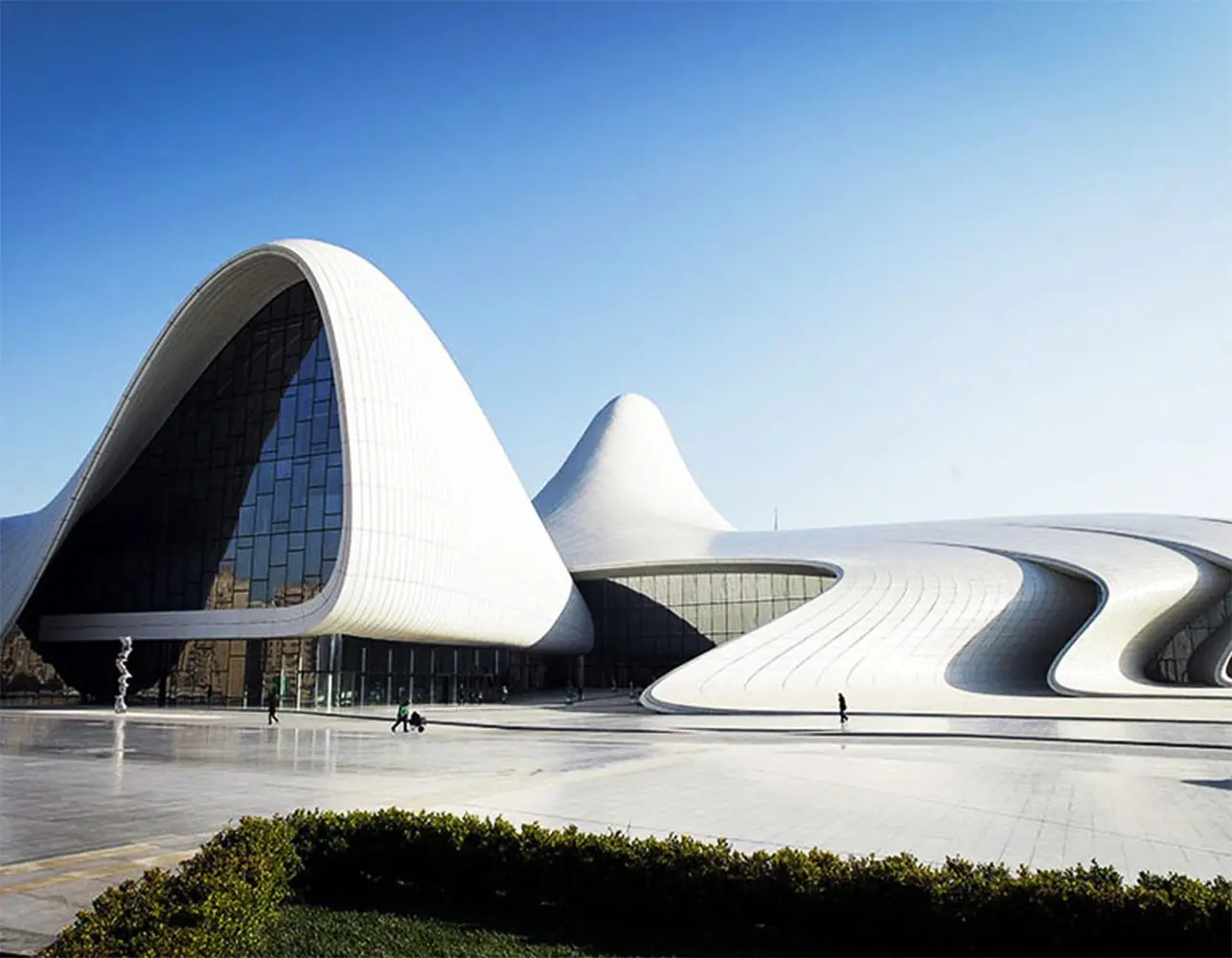
Heydar Aliyev Center
This project, located in Baku, serves as a center for a wide range of cultural and artistic activities. Designed with a strong emphasis on showcasing Azerbaijani culture, it aims to create a seamless transition between indoor and outdoor spaces, welcoming visitors into its fluid environment. Another key objective of this design is its commitment to traditional and Islamic arts of the region, such as calligraphy, carpet weaving, and intricate patterns, which elegantly extend into the ceilings and domes.
The architectural form of this project is so intelligently crafted that its flowing waves, branches, and flexibility transform the plaza into a breathtaking landscape. This space not only provides a striking visual experience but also plays multiple functional roles, including welcoming, inviting, accommodating, and guiding visitors across various levels within the building.
The Heydar Aliyev Center is constructed through the integration of two structural systems: a concrete framework combined with a space-frame system. This combination allows for widely spaced columns, ensuring that vertical structural elements remain concealed within the walls. As a result, visitors experience an uninterrupted and fluid interior space. The geometry of the design incorporates striking surfaces supported by curved boot-shaped columns, ensuring both stability and aesthetic harmony. This seamless integration with its surroundings enables the center to host a diverse range of cultural events, making it a landmark of architectural and artistic excellence.
- Year: 2013
- Location: Baku, Azerbaijan
London Aquatics Centre
The London Aquatics Centre, built for the Olympic Games, is located in the southeastern part of the Olympic Park. Inspired by the fluid geometry of moving water, its design features a sweeping, wave-like roof that emerges from the ground, symbolizing the motion of water.
Situated along a route that intersects with the city’s bridge, the facility houses three pools, including the competition pool, which accommodates 17,500 spectator seats during the games.
- Year: 2014
- Area: 15,950 m²
- Location: London
Maggie’s Centre at Victoria Hospital
The Maggie’s Fife Centre, located at Victoria Hospital in Scotland, is designed to provide support and care for cancer patients. Positioned at the hospital’s recessed edge, the center is surrounded by lush greenery, creating a natural buffer that sets it apart from the rest of the medical facilities.
This unique placement allows Maggie’s Centre to serve as a transition space, bridging the gap between the structured hospital environment and the peacefulness of nature.
- Year: 2006
- Location: Scotland
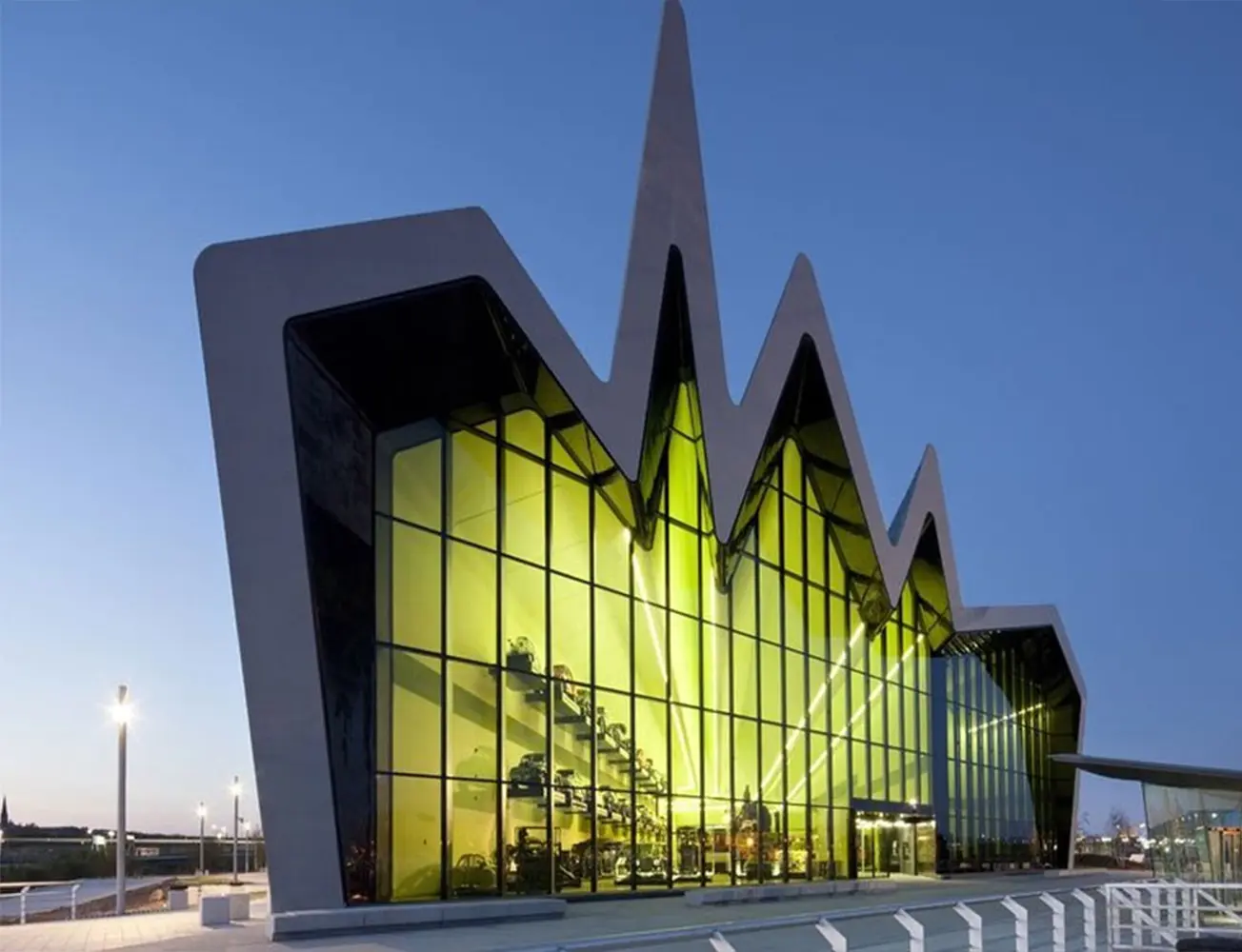
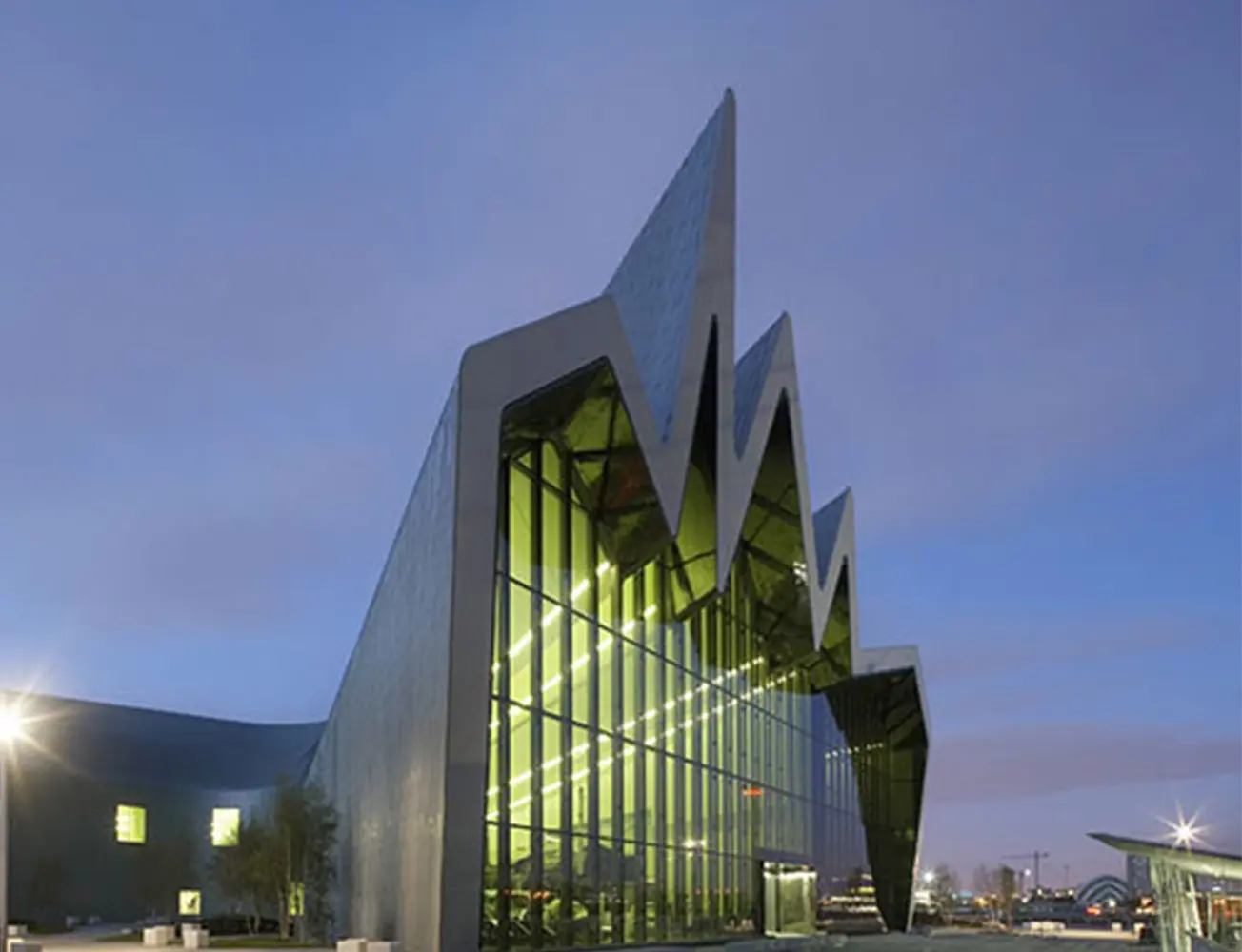
Glasgow Riverside Transport Museum
The Glasgow Riverside Transport Museum, located in Scotland, was named the best design in the prestigious European Museum of the Year Award (EMYA). The museum features a diverse collection of transportation artifacts that highlight important social and global developments.
Among 40 museums from 21 European countries, the judges conducted a thorough evaluation and agreed that Zaha Hadid’s Riverside Museum meets the highest standards of quality set by EMYA. The main reason for its victory was its strong connection to Glasgow’s rich cultural and historical heritage.
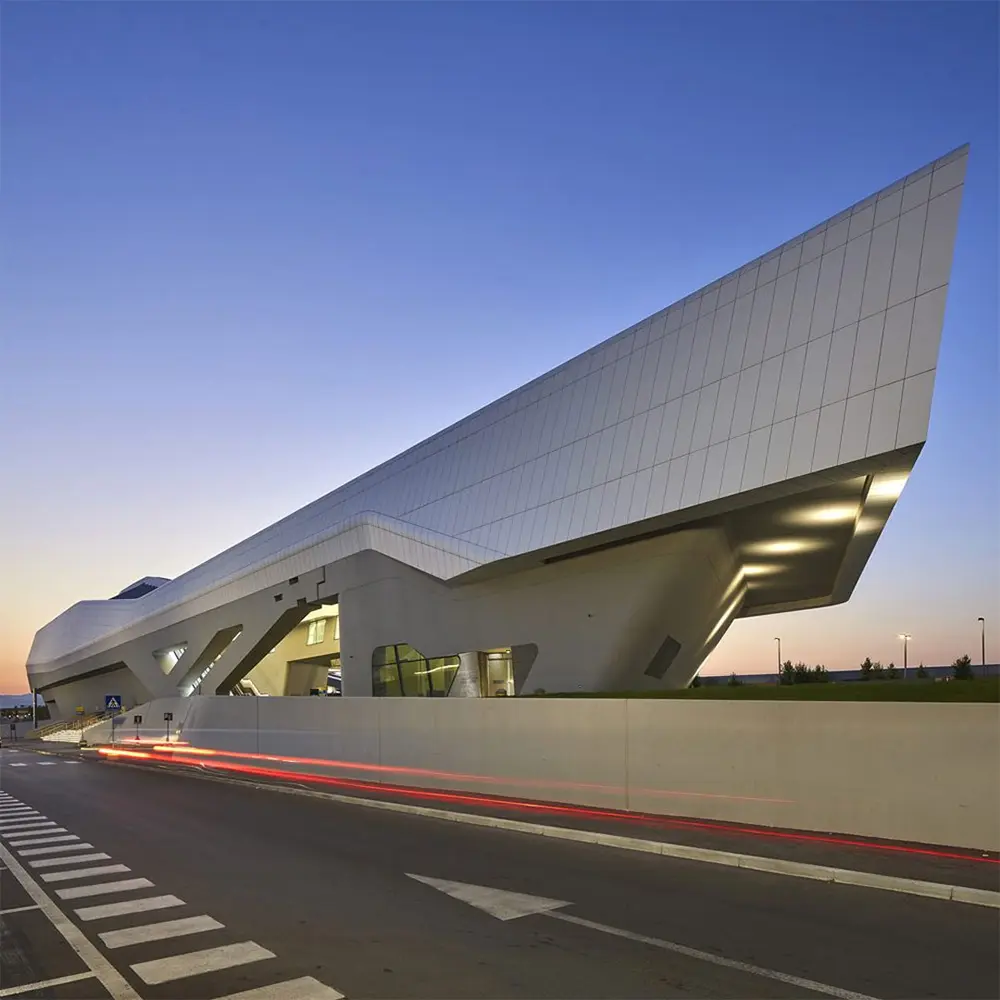
Naples High-Speed Train Station
The Napoli Afragola Train Station is one of the key transport hubs in southern Italy, designed to facilitate seamless travel across the region. It serves four high-speed intercity lines, three regional lines, and a local commuter line.
Located 12 kilometers north of Naples, the station connects the surrounding neighborhoods of Acerra, Afragola, Casoria, and Naples, making it a vital intersection in southern Italy’s rail network. By linking 15 million residents to the rest of Europe, it plays a crucial role in regional and international connectivity. The station’s layout is designed to enhance the building’s environmental sustainability while optimizing passenger flow.
- Year: 2017
- Area: 30,000 m²
- Architects: Zaha Hadid Architects
BMW Central Building, Leipzig
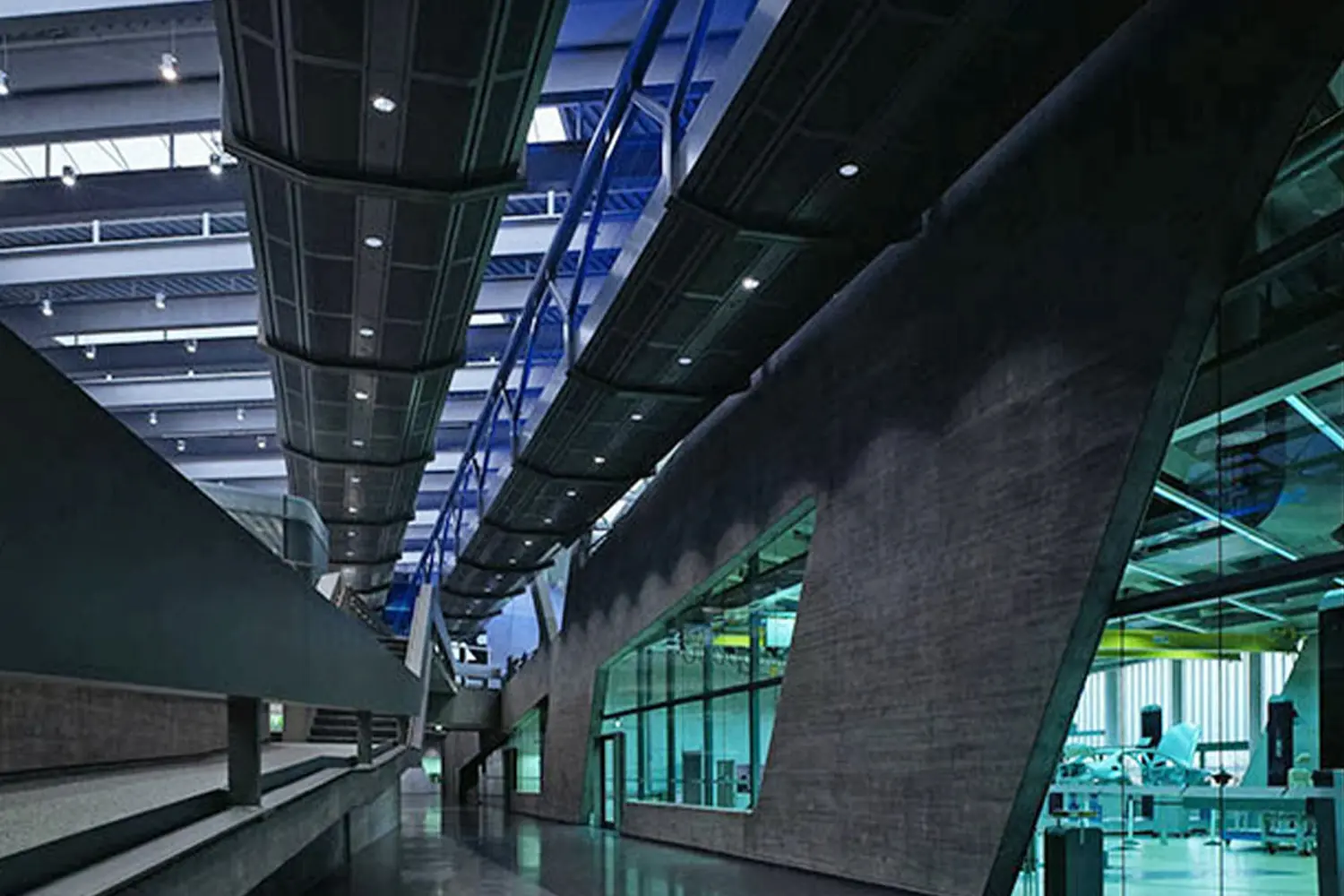
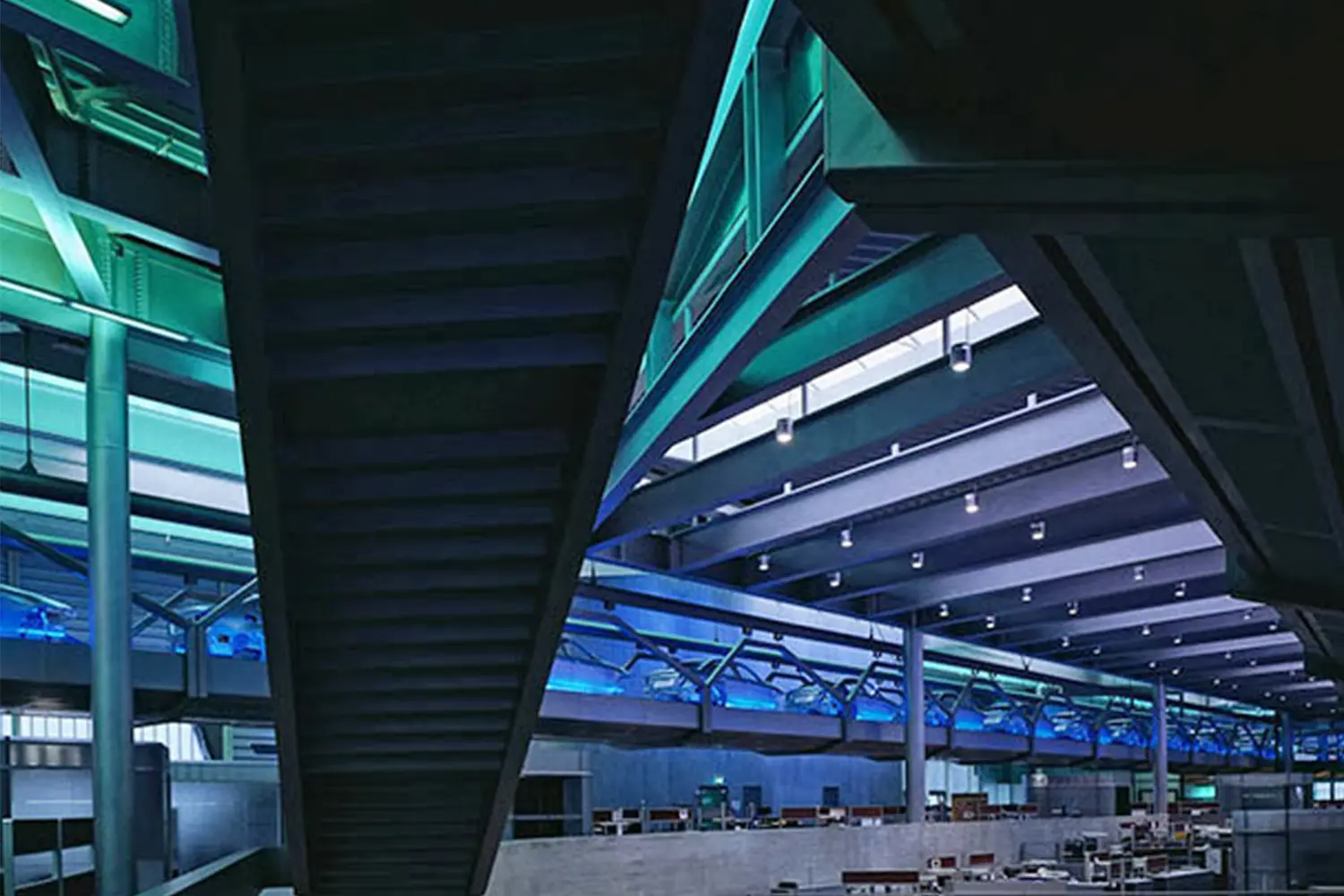
The BMW Central Building in Leipzig is an architectural statement in industrial design, serving as a transition space between the production halls and public areas. Rather than being a traditional office space, it functions as an active link within the facility’s workflow.
Inside the building, two continuous tiered platforms extend like massive staircases, one running from north to south and the other from south to north, creating a seamless connection. A staircase at the center leads to the first floor, while another, starting from the southern end near the cafeteria, integrates movement within the space.
A unique feature of the design is how cars pass through the glass-walled lobby, offering visitors a direct view of the production process before returning to their assembly route.
- Year: 2005
- Area: 27,500 m²
- Client: BMW
- Architectural Style: Folding

Phaeno Science Center, Wolfsburg
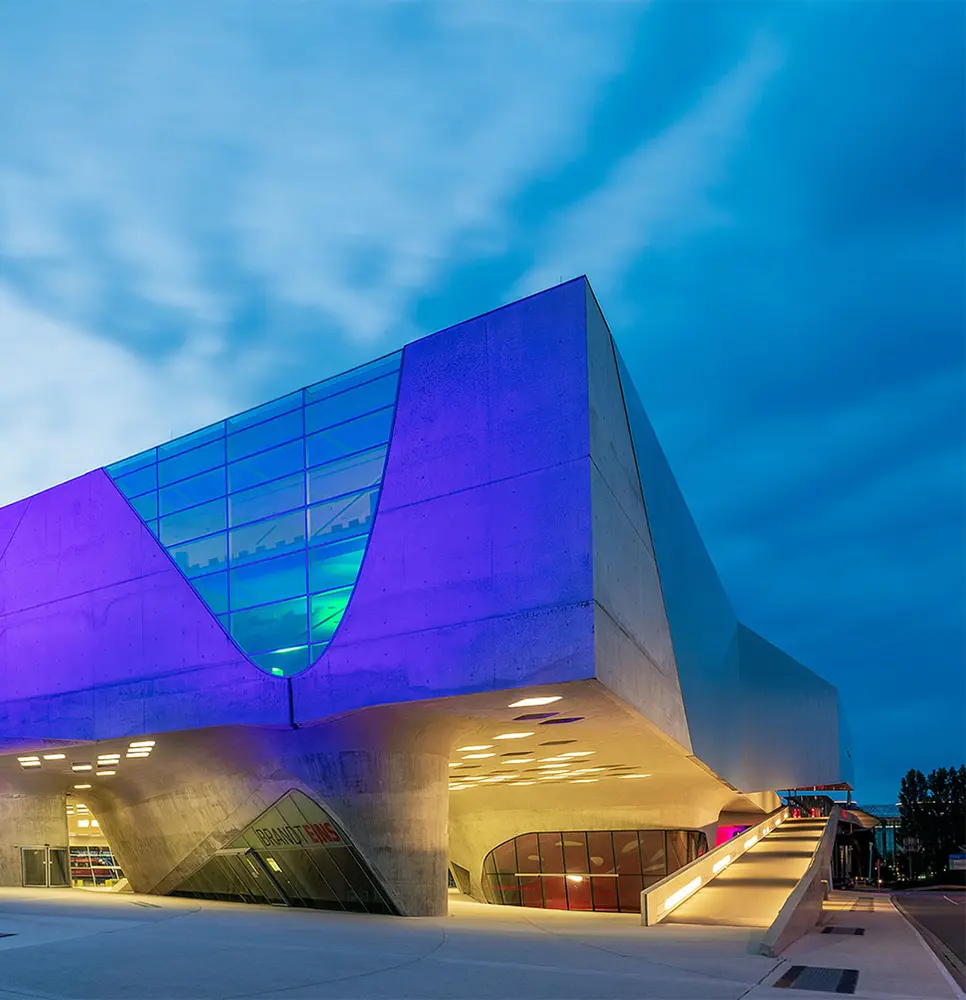
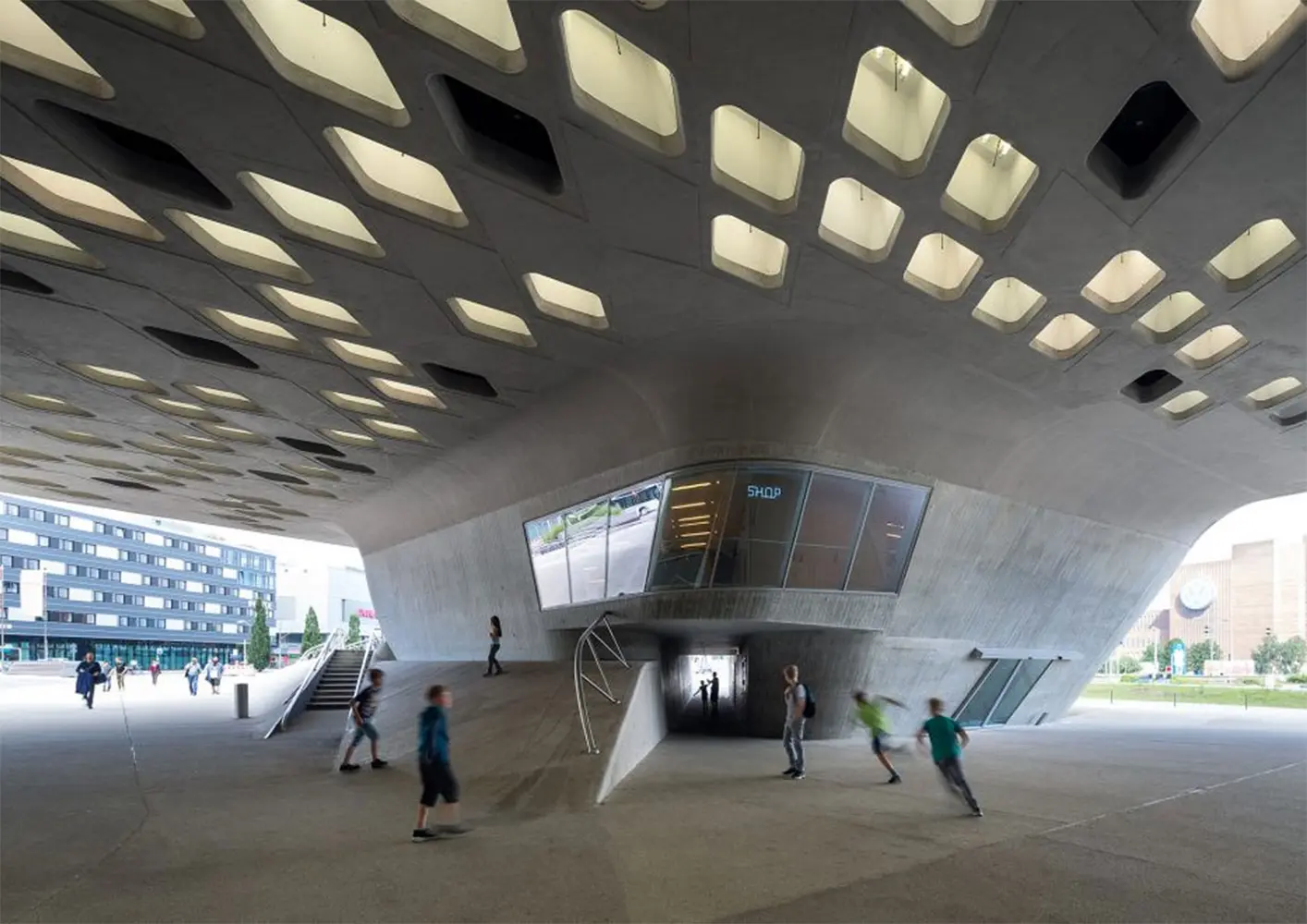
The Phaeno Science Center in Wolfsburg was the first museum of its kind, completing a network of significant cultural buildings designed by Aalto, Scharoun, and Sugar. Inspired by the concept of a “magic box,” the design aims to awaken curiosity and exploration in its visitors.
The building’s unique structure embodies transparency and porosity, creating an engaging and dynamic environment that invites discovery.
- Year: 1930
- Area: 12,000 m²
- Location: Wolfsburg, Germany
Fereshteh Hotel, Tehran
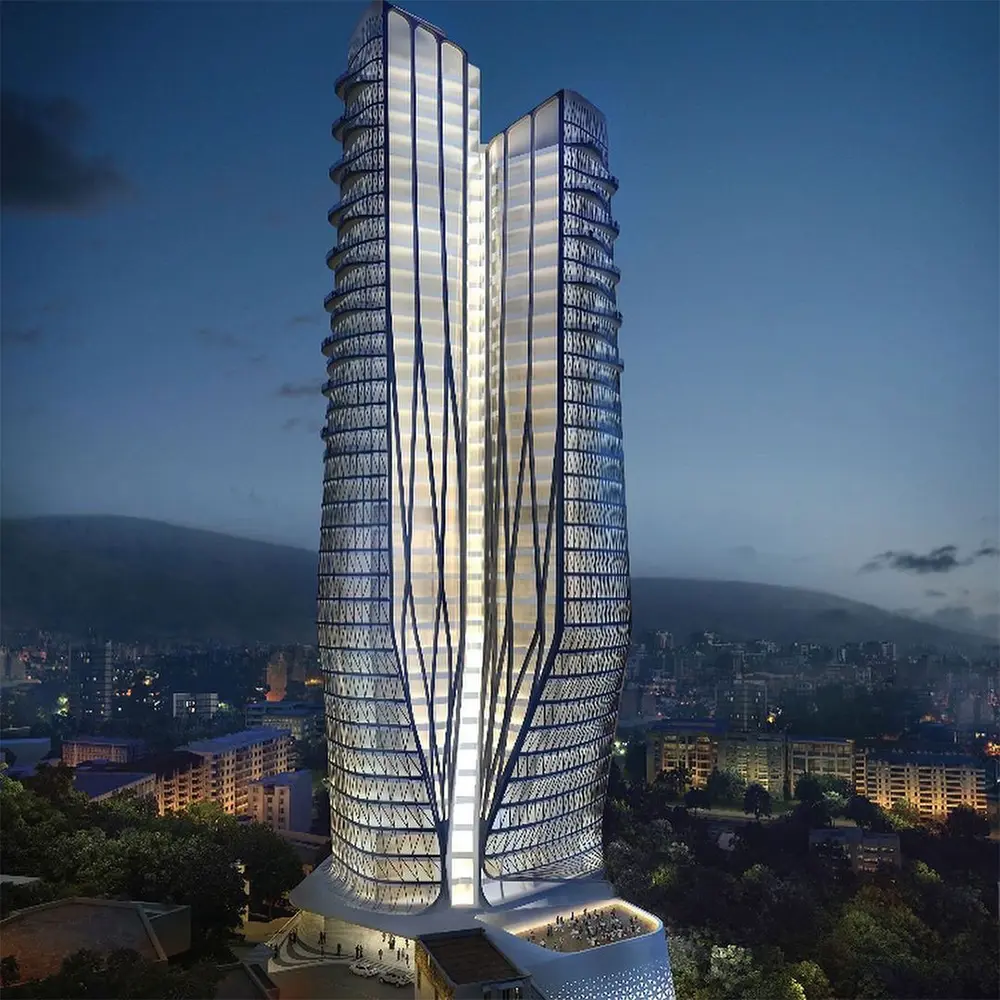
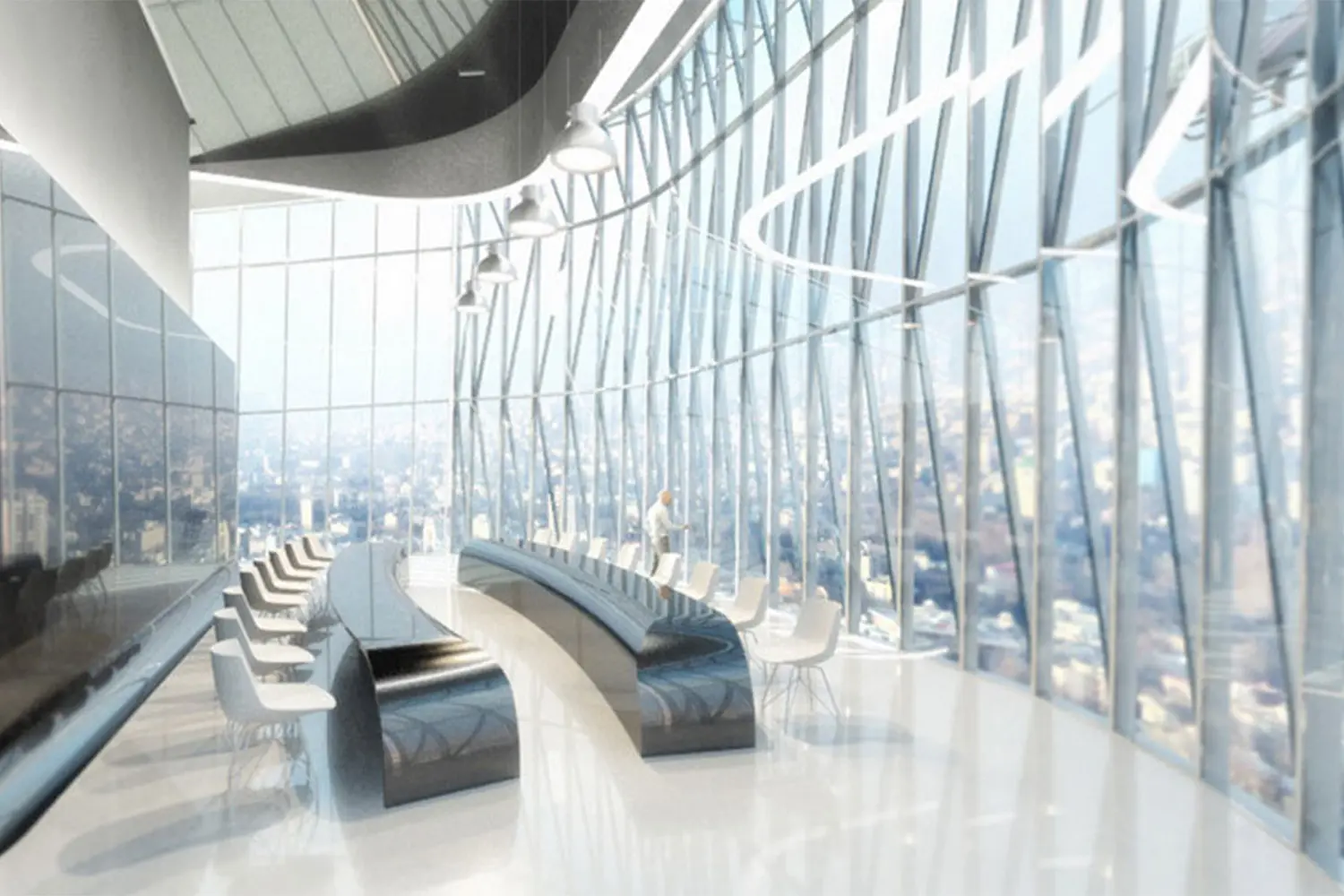
The Fereshteh Hotel in Tehran stands as one of the most luxurious and visually stunning hotels in the world. Rising 58 stories high, it features 81 suites, 400 rooms, and spans an impressive 160,000 square meters.
The hotel includes nine floors of parking, a seven-story shopping center, handicraft stores, conference halls, and advanced facilities designed to provide a premium experience.
- Area: 4,574 m²
- Total Built-Up Area: 110,000 m²
- Height: 230 meters
- Function: Commercial & Office
Dominion Office Building, Moscow
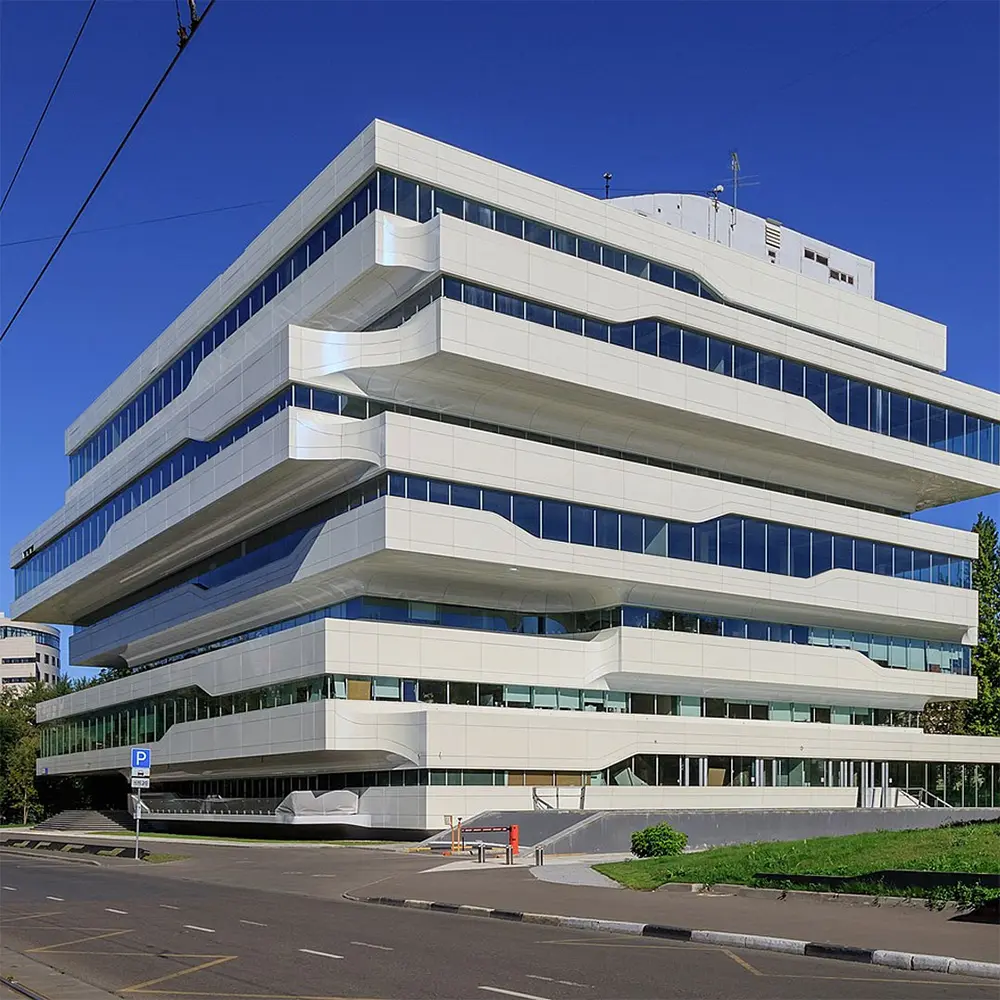
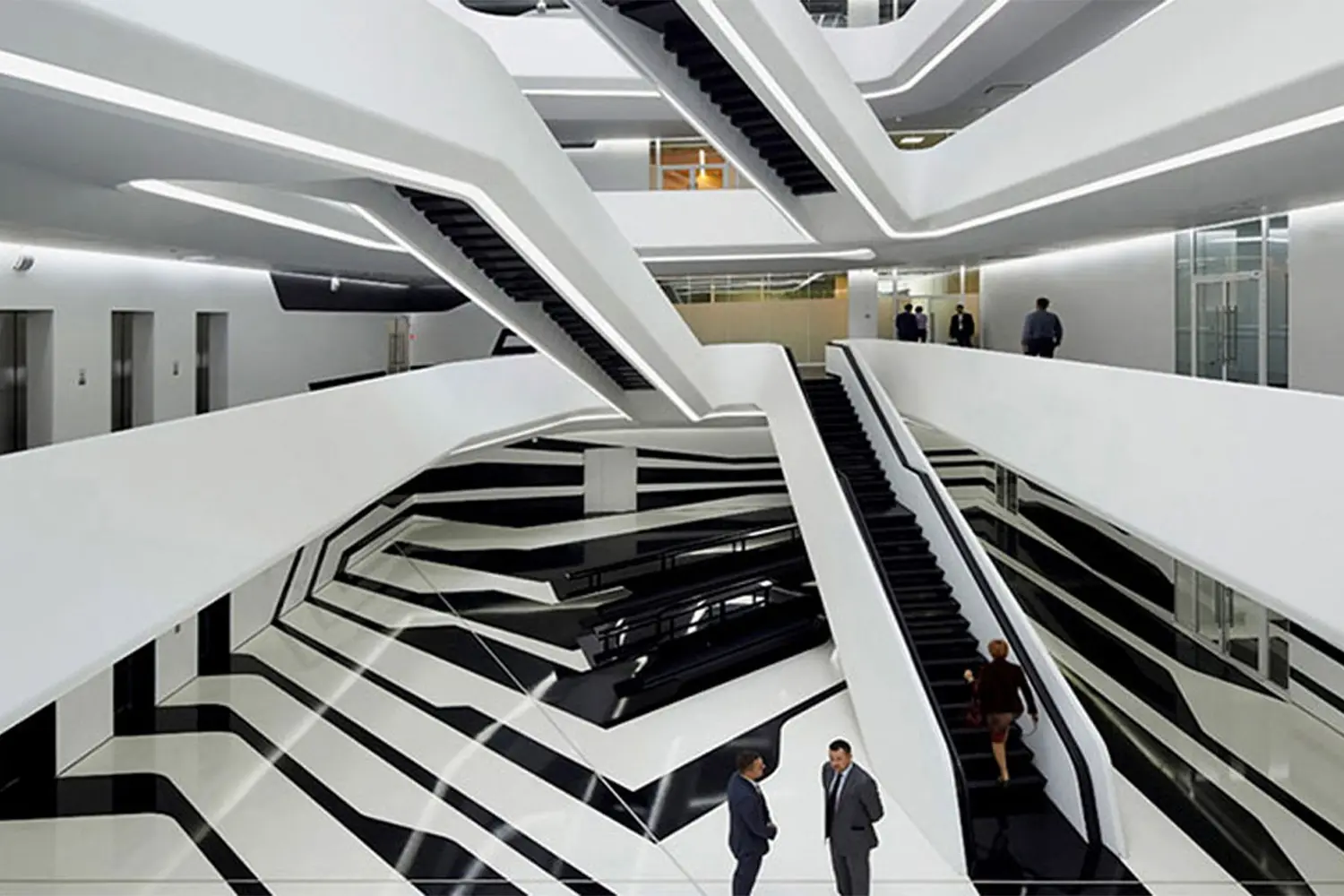
The Dominion Office Building, located in eastern Moscow near the Dubrovka tram and trolleybus station, is a striking example of contemporary office architecture. The design consists of stacked vertical plates, interconnected by structural elements that create a sense of openness and fluidity.
At the heart of the building, a central atrium extends through all floors, allowing natural light to flood the interior and enhance the workspace environment. This interconnected design encourages collaboration among different companies and industries, fostering a dynamic and cooperative work atmosphere.
- Year: 2015
- Area: 21,184 m²
- Location: Dubrovka, Moscow
- Design: Zaha Hadid, Patrik Schumacher
Design for the University of Milan
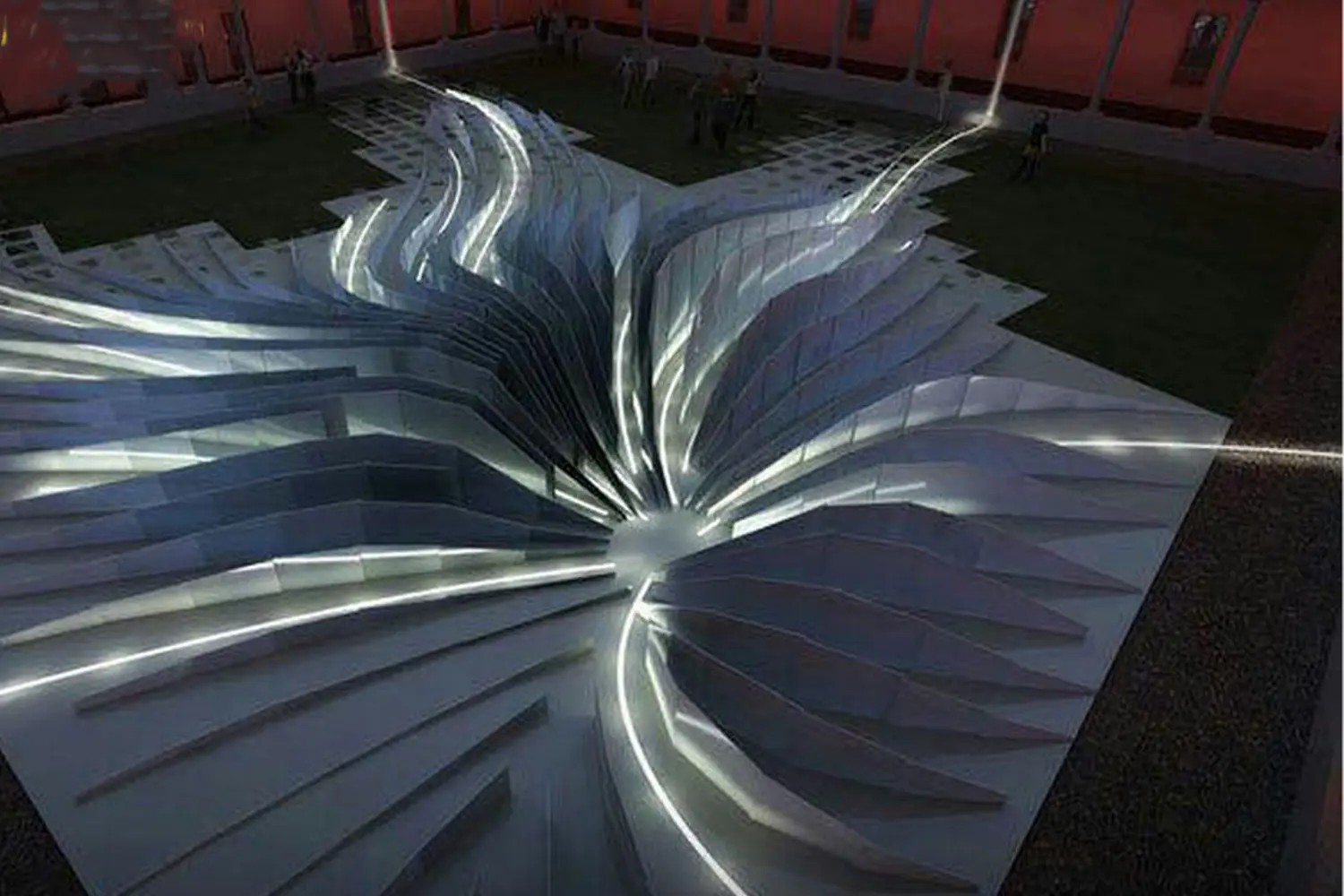
This project features a dynamic arrangement of Italian ceramic slabs at the University of Milan, forming a three-dimensional vortex-like structure. A variety of flat and uniquely shaped ceramic panels were carefully organized to transform the rigid courtyard geometry into a fluid and dynamic spatial structure.
The panel system varies in height, reaching up to 2 meters at its peak, creating a visually striking and immersive experience.
- Area: 800 m²
- Award: Pritzker Architecture Prize for the Rotational Design
Dubai Residential & Commercial Complex
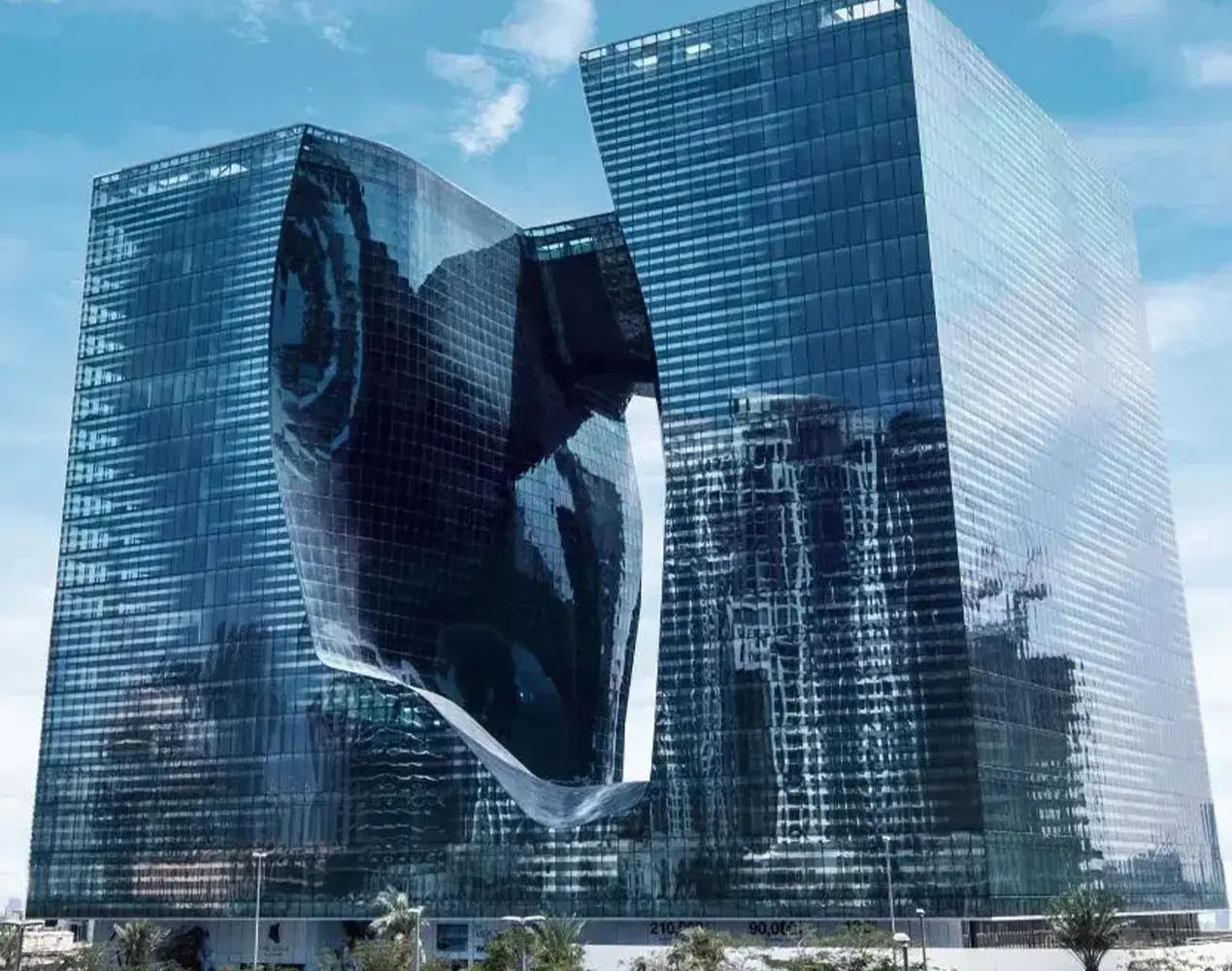
In the past, high-rise construction in Dubai was primarily influenced by Western architecture. However, over time, the city’s urban planning and landscape design evolved, embracing a more artistic and contemporary approach.
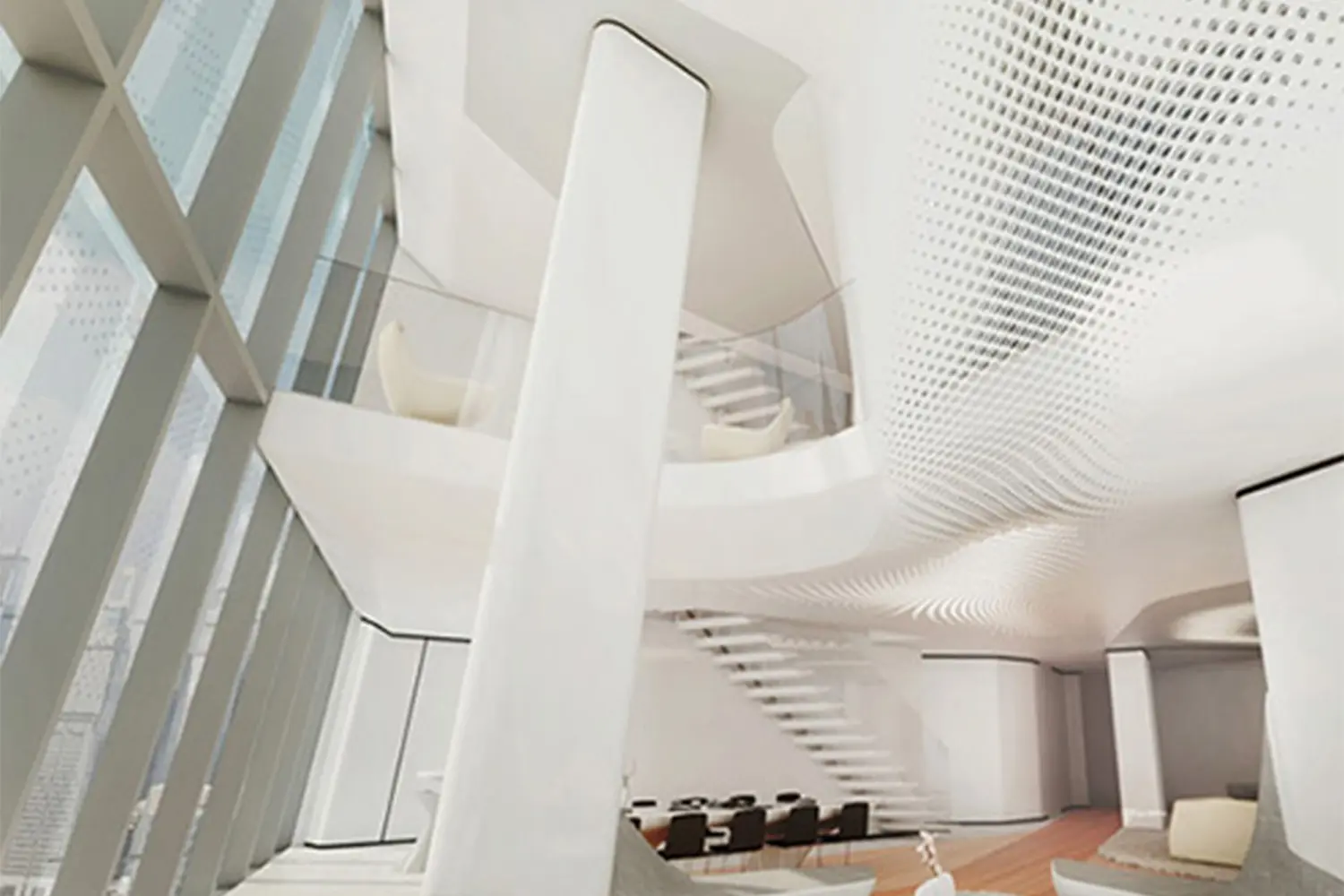
The hotel suites within the complex were designed to provide comfortable accommodations for both international travelers and local residents. Each room is equipped with advanced features and digital gadgets, ensuring a seamless and convenient stay.
Expansive skylights illuminate the public spaces, while lightweight materials in the interior enhance the overall efficiency and elegance of the design.
Design of the Tallest Skyscraper
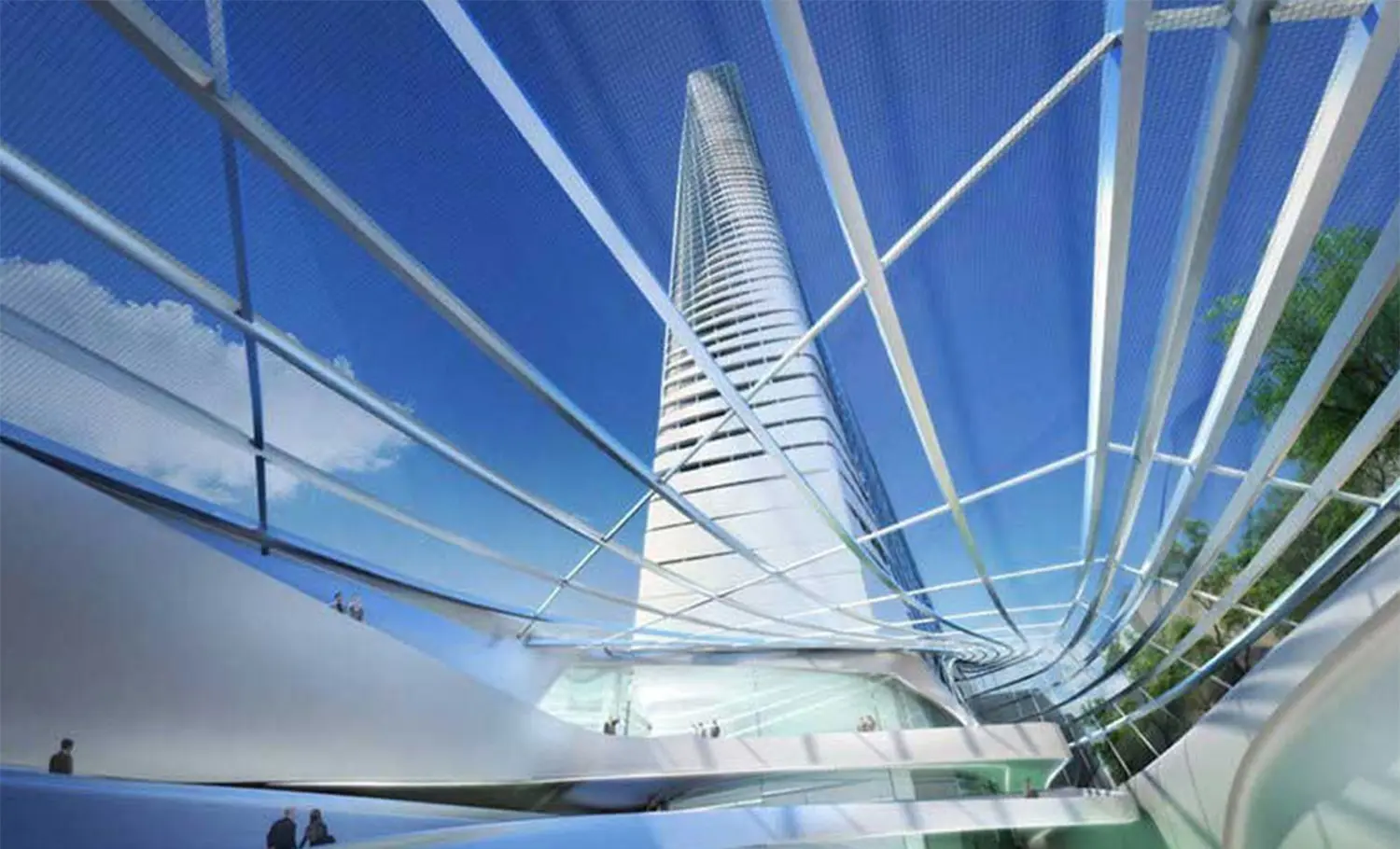
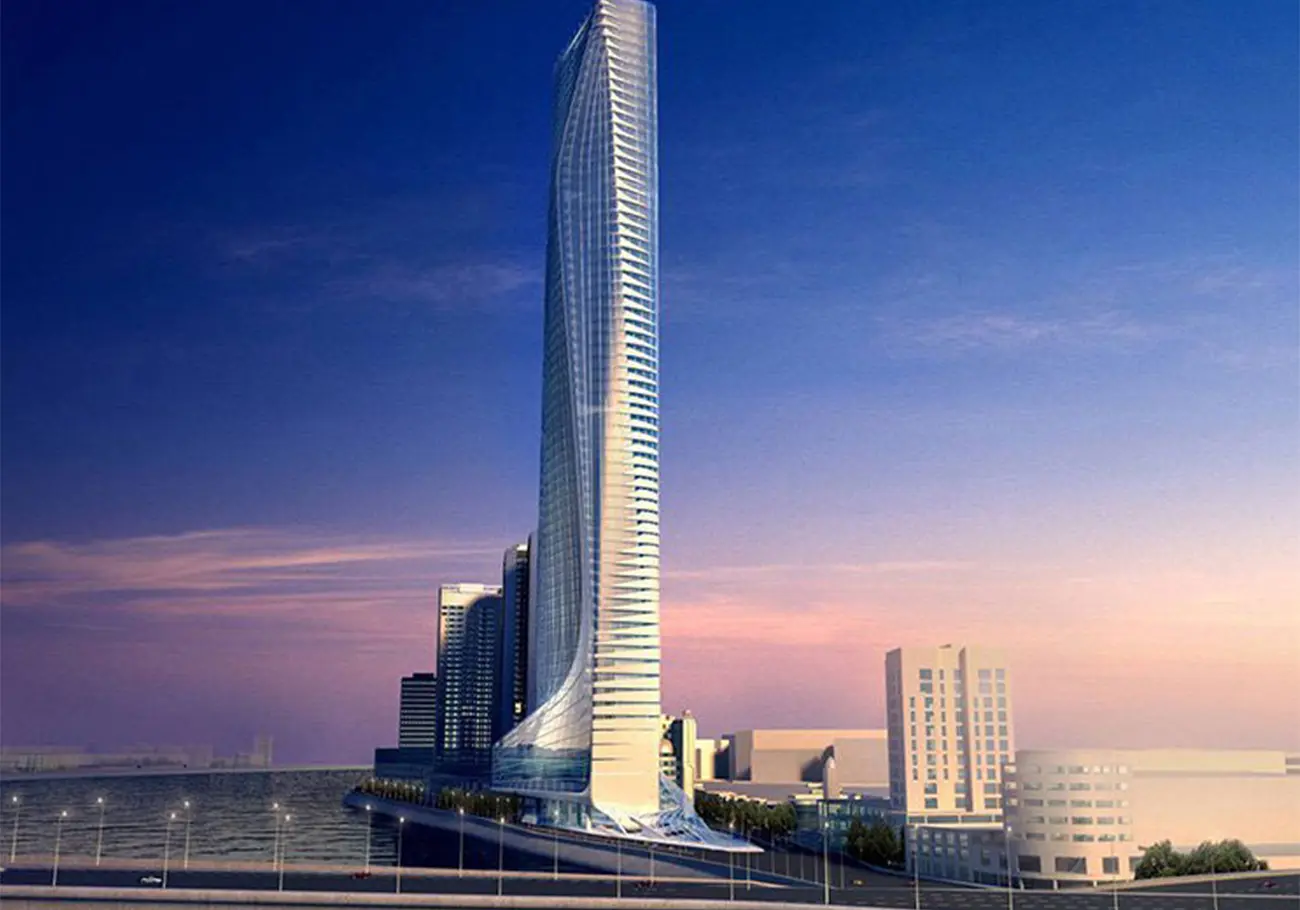
The tallest skyscraper in Egypt, set to rise in Cairo, marks the country’s return to its vision of building Africa’s tallest structure. President Abdel Fattah el-Sisi and his government have collaborated with developers and Zaha Hadid Architects to launch the 70-story Nile Tower project.
This modern development, inspired by Cairo’s identity, the Nile River, and the Pyramids of Egypt, aims to contribute to the country’s growth and progress. The tower’s design includes 36 floors of residential apartments, a luxury spa, commercial spaces, and a 320-room hotel.
Milad Tower Phase II Model
In 2014, Zaha Hadid Architects won the design competition for Phase II of Milad Tower, securing first place among 31 domestic and international architecture firms. Their innovative proposal set the stage for the next phase of development in one of Tehran’s most iconic landmarks.
Zaha Hadid Architects’ Latest Project
The latest project by Zaha Hadid Architects is set to become an iconic symbol in NEOM, Saudi Arabia’s visionary new city. The 330-meter tower will be built on a mountainside overlooking NEOM’s artificial lake, adding to the city’s futuristic skyline.
Renderings of NEOM reveal that the tower’s design resembles a cluster of carefully arranged crystals, creating a striking and unique architectural form. The building is primarily designed as an exhibition center, but it will also feature numerous retail spaces and observation decks, offering breathtaking views of the city.


