
Tadao Ando, a prominent Japanese architect, was born in Osaka, Japan on September 13, 1941. He was self-taught in architecture and worked as a boxer and truck driver before entering the field.
His architectural style combines modern forms with traditional Japanese concepts, and he often uses exposed concrete as the main material in his designs.
Ando pays special attention to the interaction between nature and architecture in his designs. He believes that architecture should allow
users to experience light, shadow, weather, and air. Some of the prominent features of his architecture include:
- Using raw concrete with a smooth and polished surface
- Emphasis on space and simplicity
- Combining precise geometry with natural elements
- Creating contrast between light and shadow to further influence human emotions
In 1995, he received the Pritzker Architecture Prize, one of the most prestigious architectural awards in the world.
Ando’s architecture emphasizes human interaction with nature, and he strives to create a space where users can feel and experience nature.
Ando has designed over 150 architectural projects throughout his career, some of the most famous of which include:
His notable works include the following:
Light Church
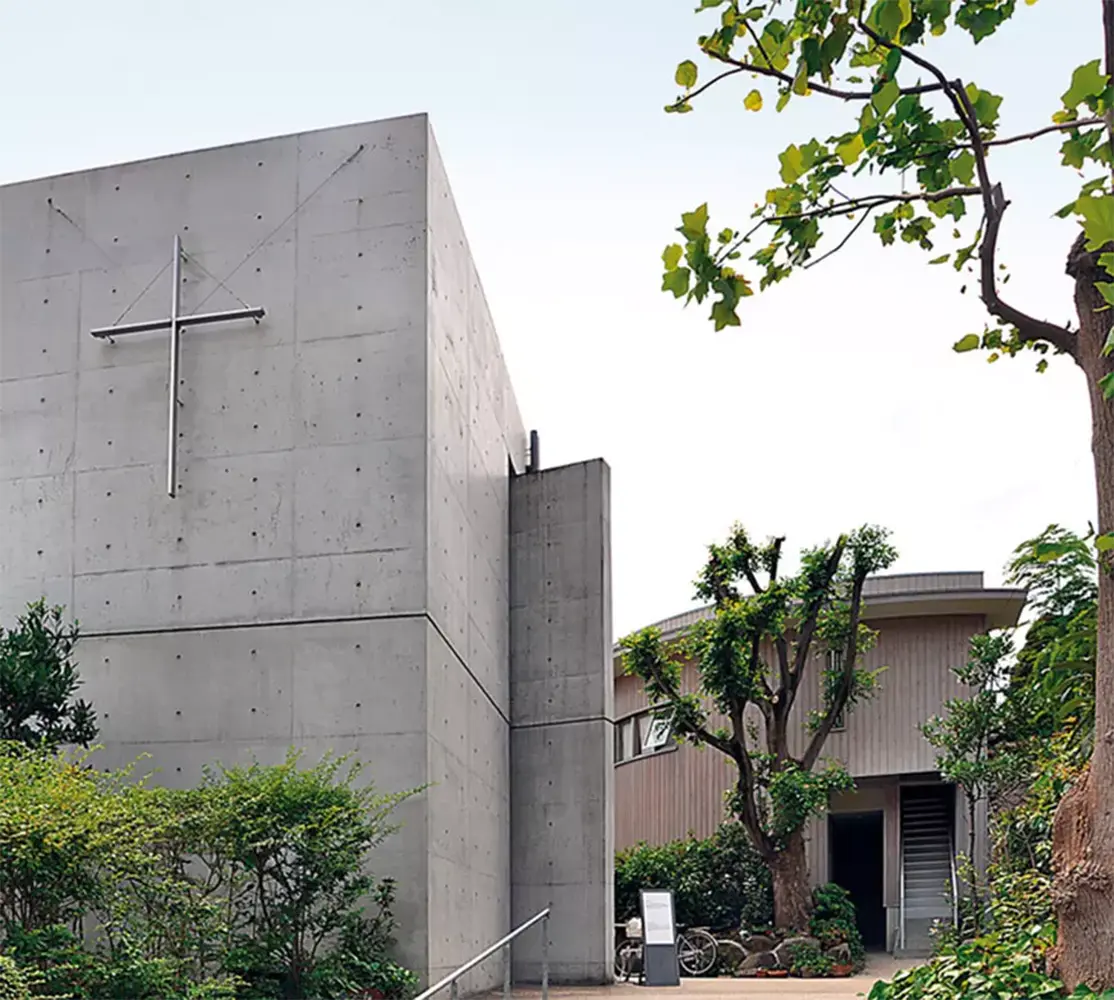
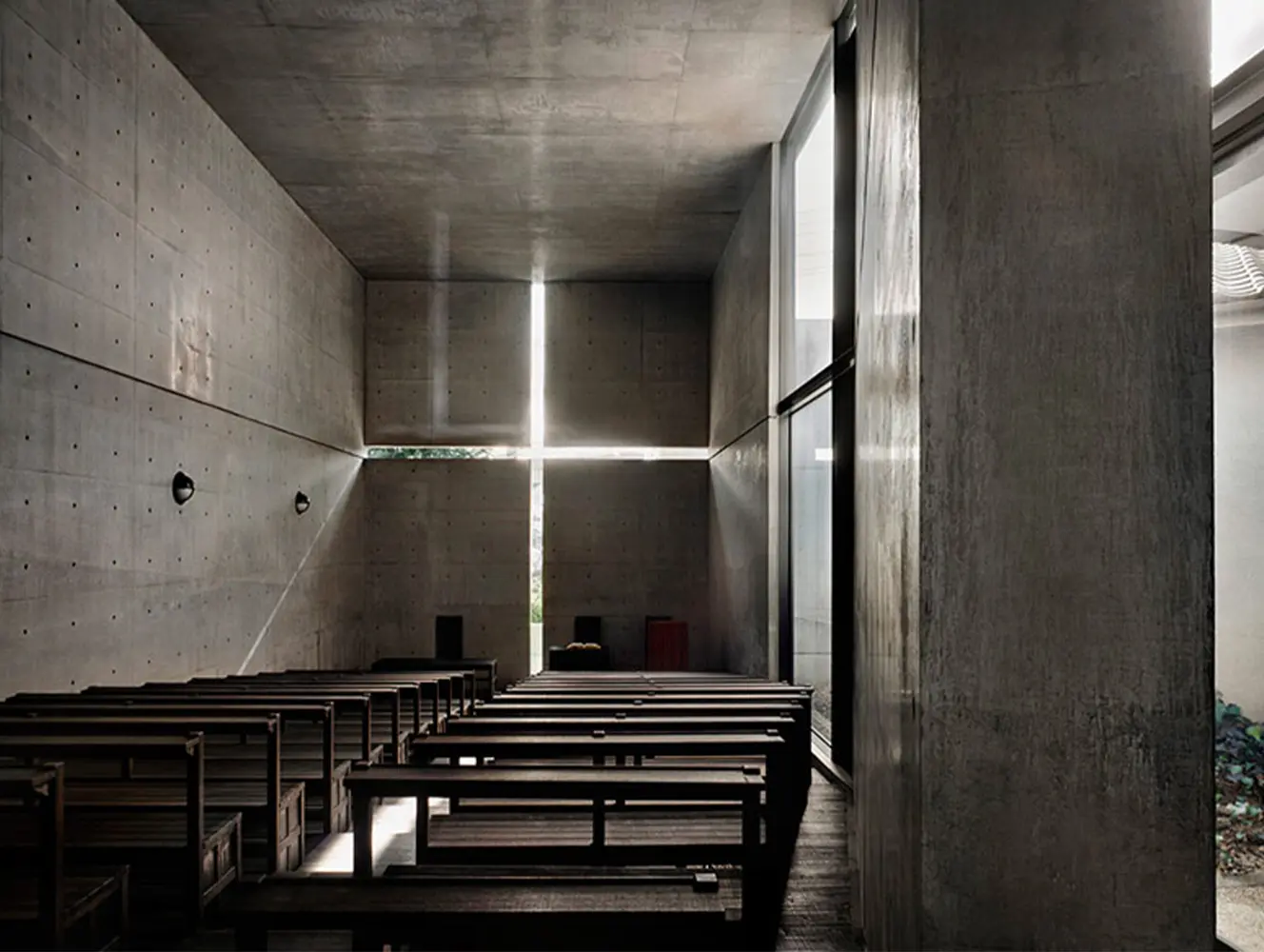
The Church of Light is one of Tadao Ando’s most prominent works, built in 1989 in Ibaraki City, Japan. The church is an example of minimalist architecture that uses exposed concrete and natural light to create a spiritual and impactful space.
Outstanding Features of the Church of Light:
- Simple design and rectangular cube with dimensions of 6×18×6 meters
- A wall with a 15-degree angle that divides the space into two parts: the church and the entrance.
- An illuminated cross that directs light inside through a cut in the wall behind the altar, creating a spiritual and inspiring atmosphere.
- The use of raw concrete and wood to create a contrast between light and dark, which is one of Ando’s design principles
Church On The Water
The Floating Church is one of Tadao Ando’s most notable works, built in 1988 in Shimokapū, Hokkaido, Japan.
This church is located in the middle of a beautiful natural park in Hokkaido and is designed using reinforced concrete, showcasing a blend of Western and traditional Japanese architecture.
Outstanding Features of the Church on the Water:
- The church consists of two overlapping cubes, one forming the main space of the church and the other its entrance.
- In front of the church is a large pond built one level above the natural river in the area.
- Entry to the church is via a semicircular spiral staircase, which creates a special spatial experience for visitors. The church uses natural light and water reflections to create a spiritual and relaxing atmosphere. The church exemplifies Ando’s architectural philosophy, which emphasizes the interaction between nature, space, and human emotions. He believes that architecture should create a sensory and spiritual experience for its users.

Fort Worth Museum of Contemporary Art
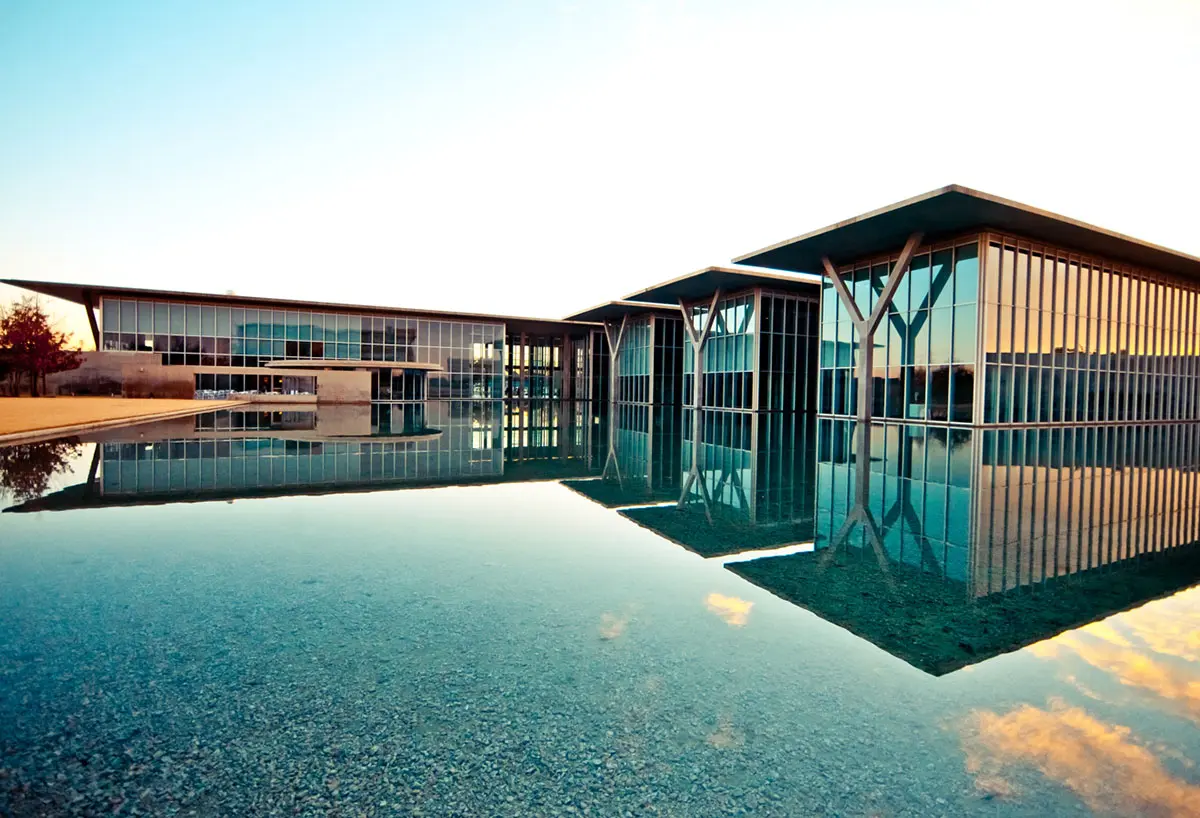
The Fort Worth Museum of Contemporary Art is a landmark work by Tadao Ando, opened in 2002 in Fort Worth, Texas, United States. It is one of the largest modern art museums in the United States and is located near Louis Kahn’s Kimball Art Museum.
Outstanding features of the museum:
- Minimalist design using exposed concrete, glass and wood.
- A combination of several rectangular cube volumes placed next to each other in an L-shape.
- The presence of a reflecting pool that reflects light and the surrounding environment, giving the space a sense of peace and tranquility.
- Using natural light to create a dynamic and changing space throughout the day.
- Displaying over 2,600 modern and postmodern works of art in a 53,000 square foot space
The museum is an example of Ando’s architectural philosophy, which emphasizes the interaction between space, light, and nature. In designing the building, he sought to create an environment where visitors can experience art alongside nature.
Water Temple
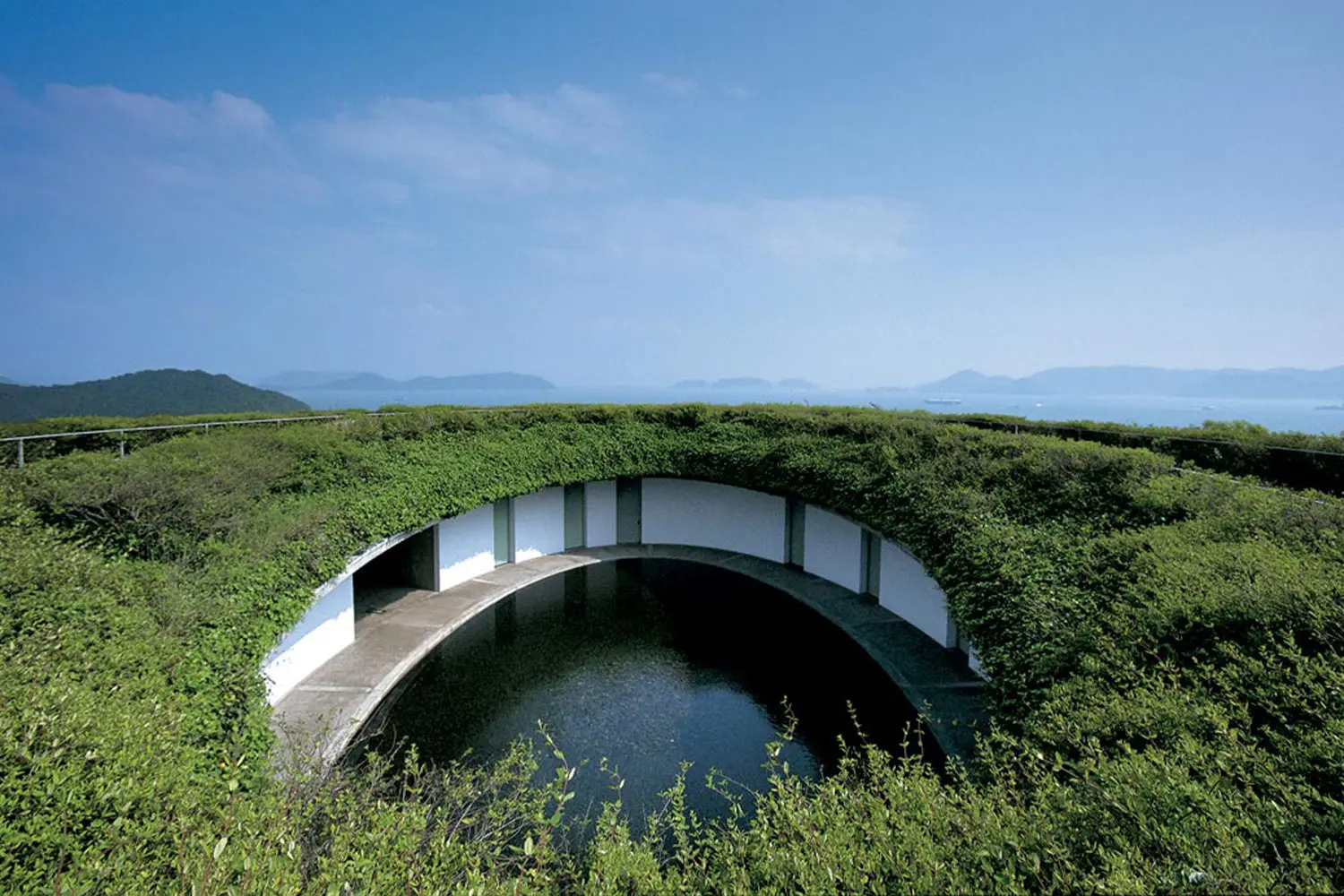
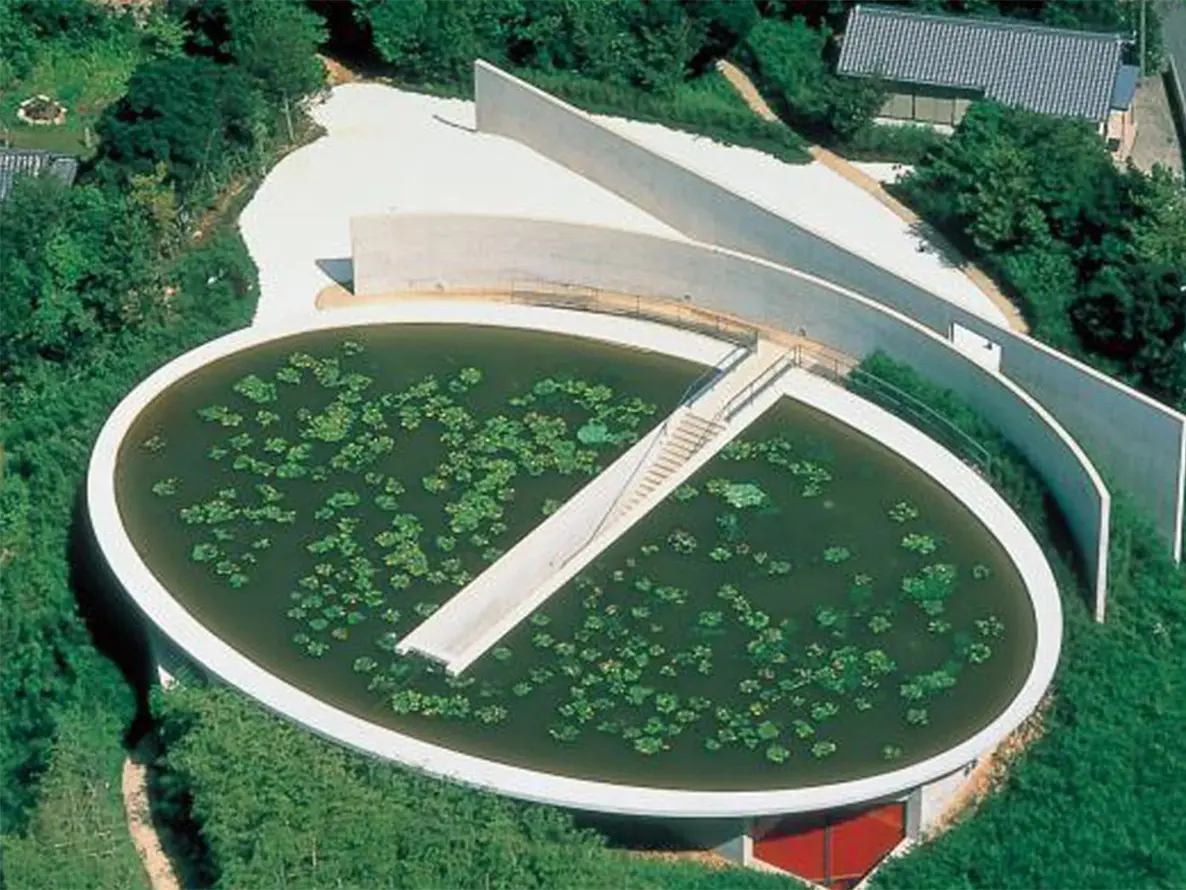
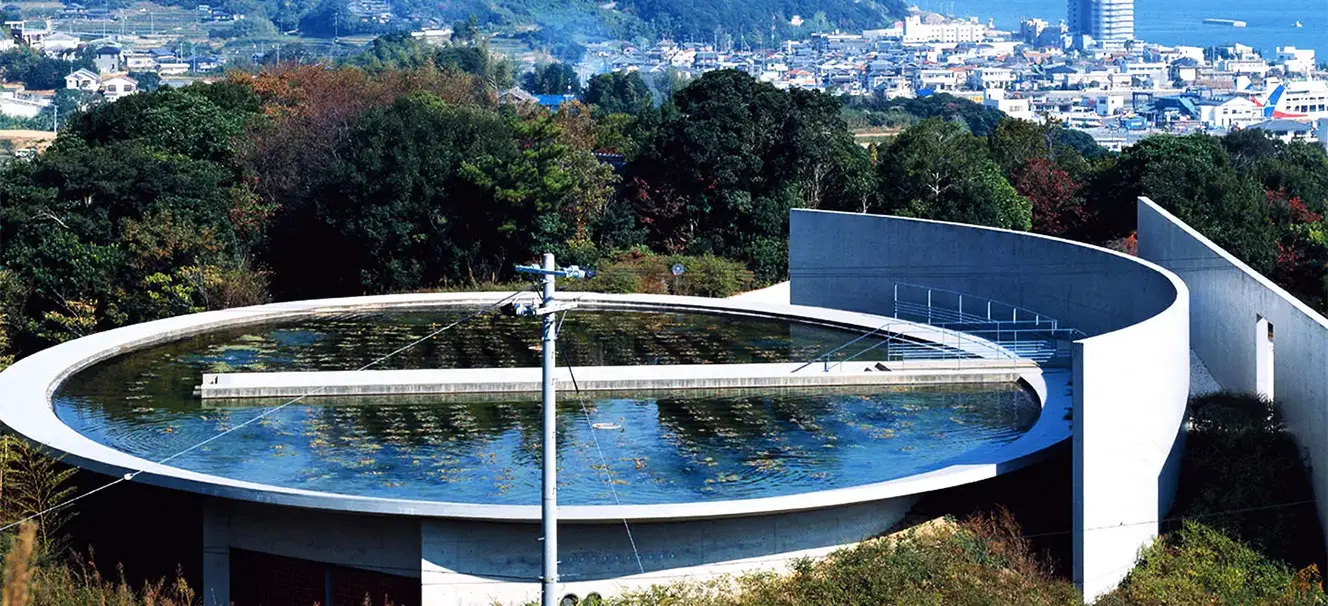
The Water Temple is one of Tadao Ando’s most famous works, located on a hill overlooking Osaka Bay in the northeast of Awaji Island. It is part of the Hompoku-ji Temple, which belongs to the Shingon sect of Buddhism.
Salient features of the Water Temple:
- An oval-shaped pool with a diameter of 130 feet, in the center of which is a spiral staircase that leads visitors to the main hall.
- The Shangrafi Hall (bright red) is located under the pond and creates a spiritual and mysterious atmosphere.
- Using exposed concrete and natural light to create a sense of calm and focus in the interior space
- An entrance with curved and straight walls that provide a special spatial experience for visitors.
This temple is a symbol of the interaction between nature, architecture, and spirituality, and Ando has strived to create a sacred and inspiring space through its design.
Naoshima Museum of Contemporary Art
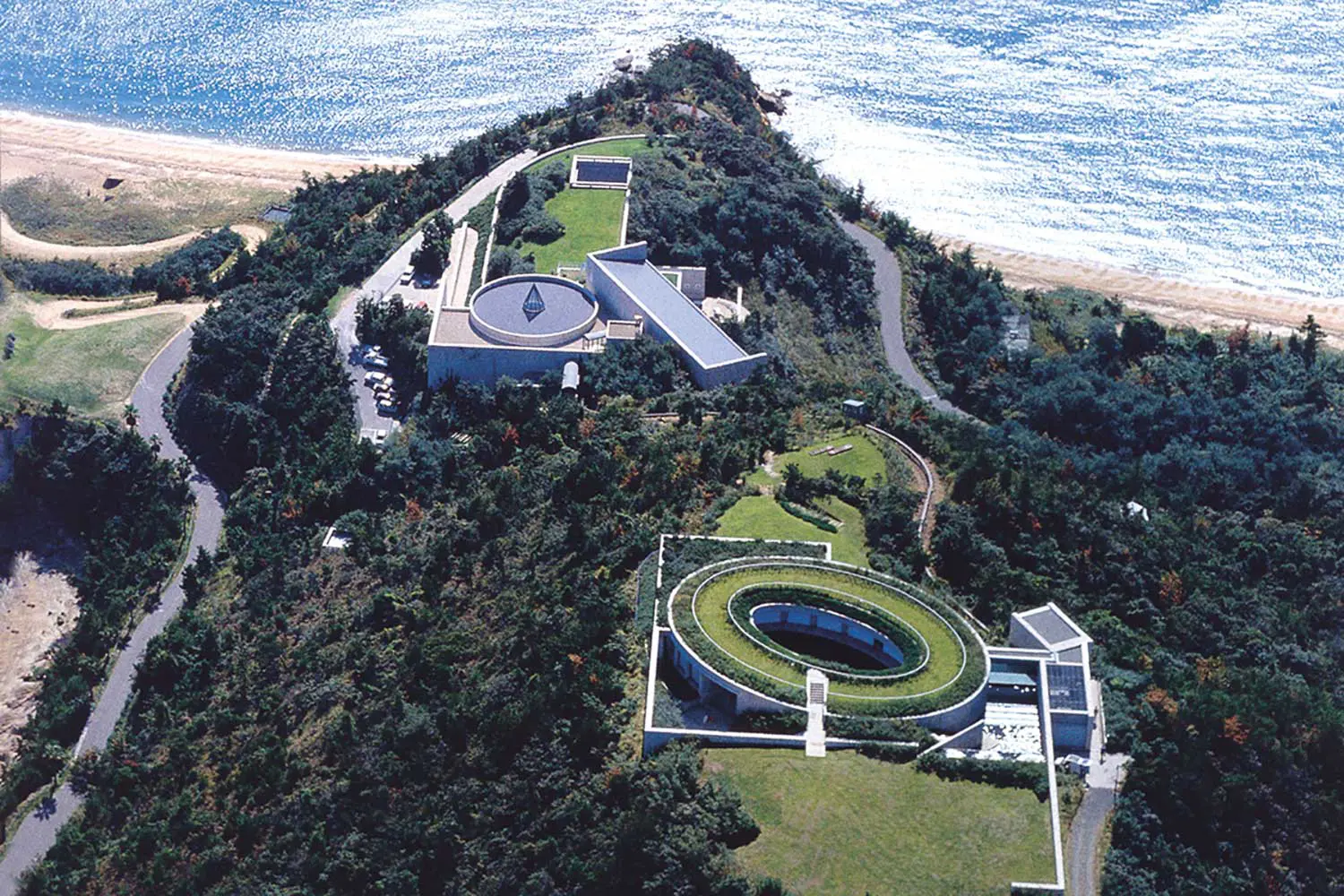
The Naoshima Museum of Contemporary Art is one of Tadao Ando’s most notable works, built between 1988 and 1992 on Naoshima Island, Kagawa, Japan.
This museum is located on the tip of a small island in the Inland Sea of Japan and, with its unique design, showcases the interaction between nature and architecture.
Outstanding features of the museum:
- Minimalist design using exposed concrete, glass and natural stone
- The combination of curved lines and open spaces inspires a sense of lightness and freedom.
- Using natural light and water reflections to create a dynamic and relaxing space
- Set in the island’s natural environment, providing a unique experience for visitors
The museum is part of the Benz House and Naoshima Extension project, which also includes a hotel, restaurant, and auditorium.