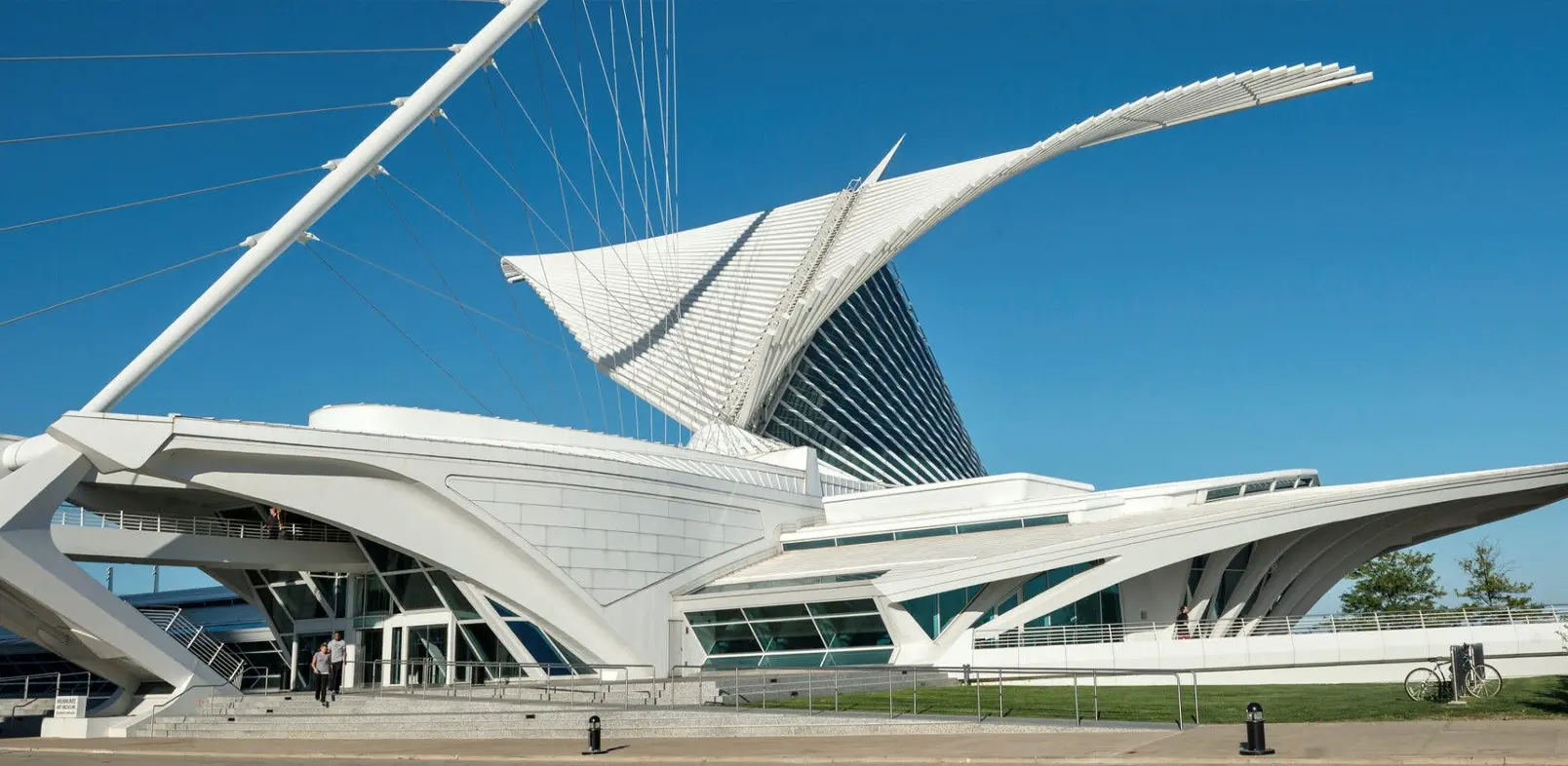

Santiago Calatrava is a prominent Spanish architect, structural engineer, and sculptor who was born on July 28, 1951, in Valencia, Spain.
Known worldwide for her unique and poetic designs, Calatrava completed her studies in architecture at the Polytechnic University of Valencia and then received a doctorate in structural engineering from the Swiss Federal Institute of Technology in Zurich.
Santiago Calatrava’s architectural style is strikingly different from many other architects, as he takes a unique approach to combining engineering, art, and inspiration from nature. Using his expertise in structural engineering, he creates designs that are not only visually beautiful but also technically masterful.
What sets Calatrava apart
- Inspiration from nature: Many of his projects are inspired by natural forms such as bird wings, sea waves, and the skeletons of living creatures.
- Movement and Dynamics: His works evoke a sense of movement, even in static structures. This is evident in the design of his bridges and special structures.
- Combining art and engineering: Unlike many architects, he places great emphasis on the engineering aspect of structures and, in this regard, is deconstructive.
- Use of modern materials: He uses materials such as steel, glass, and concrete to create a sense of transparency and lightness in the structures.
- Focus on the human experience: He cares about the interaction between humans and architecture and designs structures that are in harmony with people’s daily lives.
His works include the following
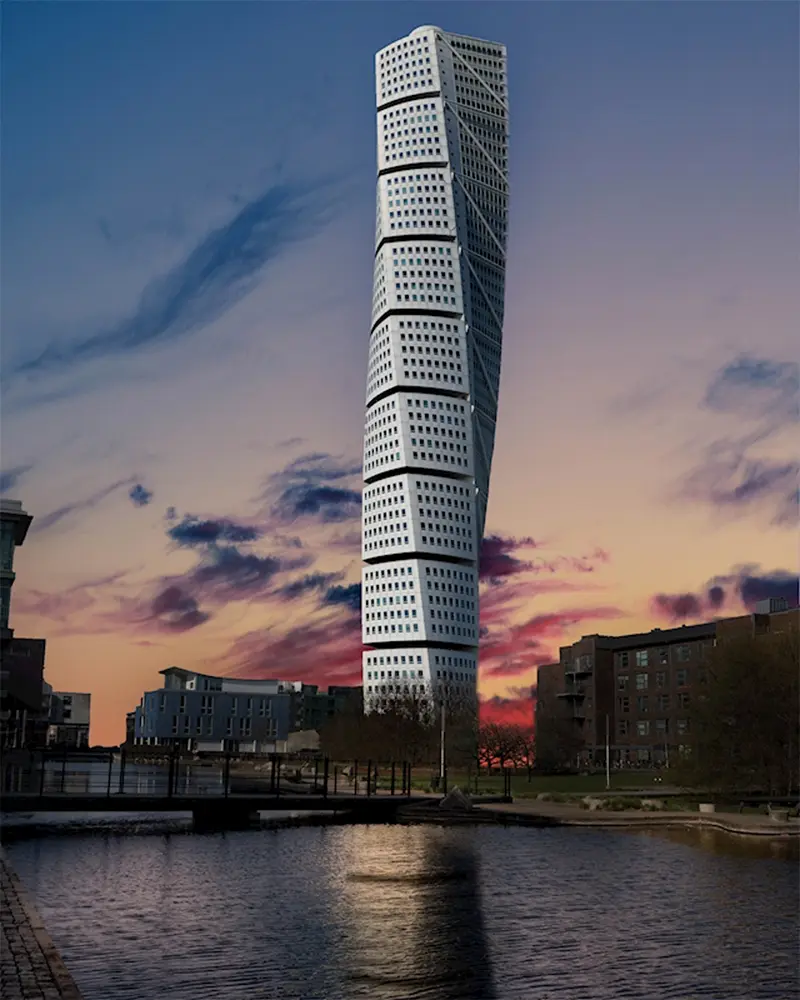
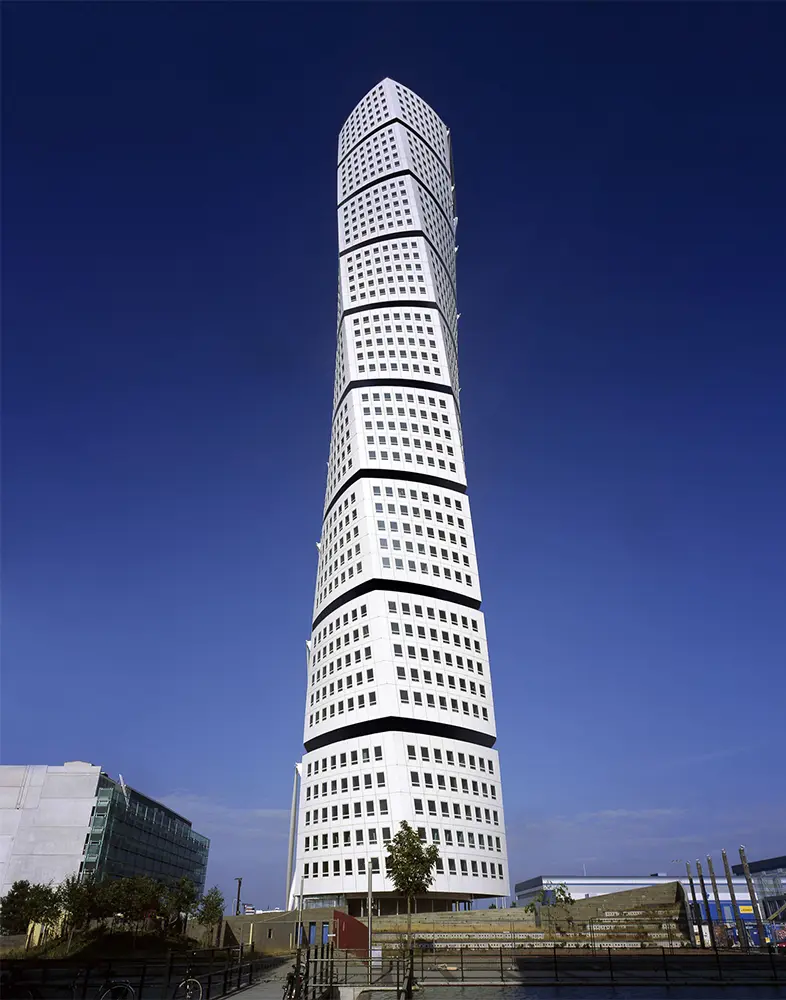
Turning Torso
One of Santiago Calatrava’s most prominent works is located in Malmö, Sweden. This tower, with a height of 190 meters and 54 floors, is the tallest building in the Scandinavian region.
The design of this tower was inspired by a sculpture called “Twisting Torso” created by Calatrava himself.
The tower consists of nine cubic sections, each with five floors, rotated 90 degrees from the bottom to the top of the tower.
This tower is not only an architectural masterpiece, but also a symbol of movement and dynamism that beautifully depicts the form of the human body.
Centro Transportation Hub
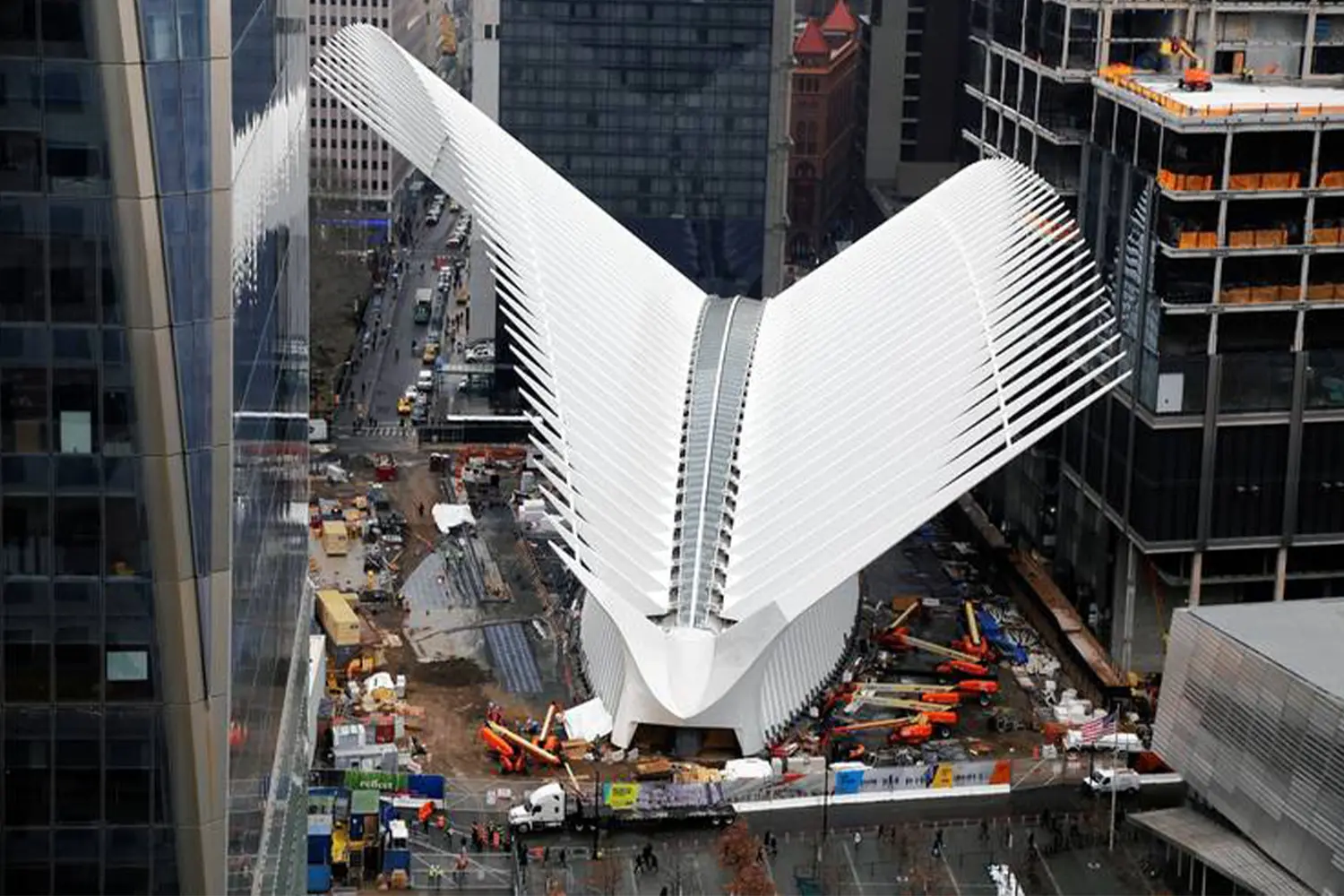
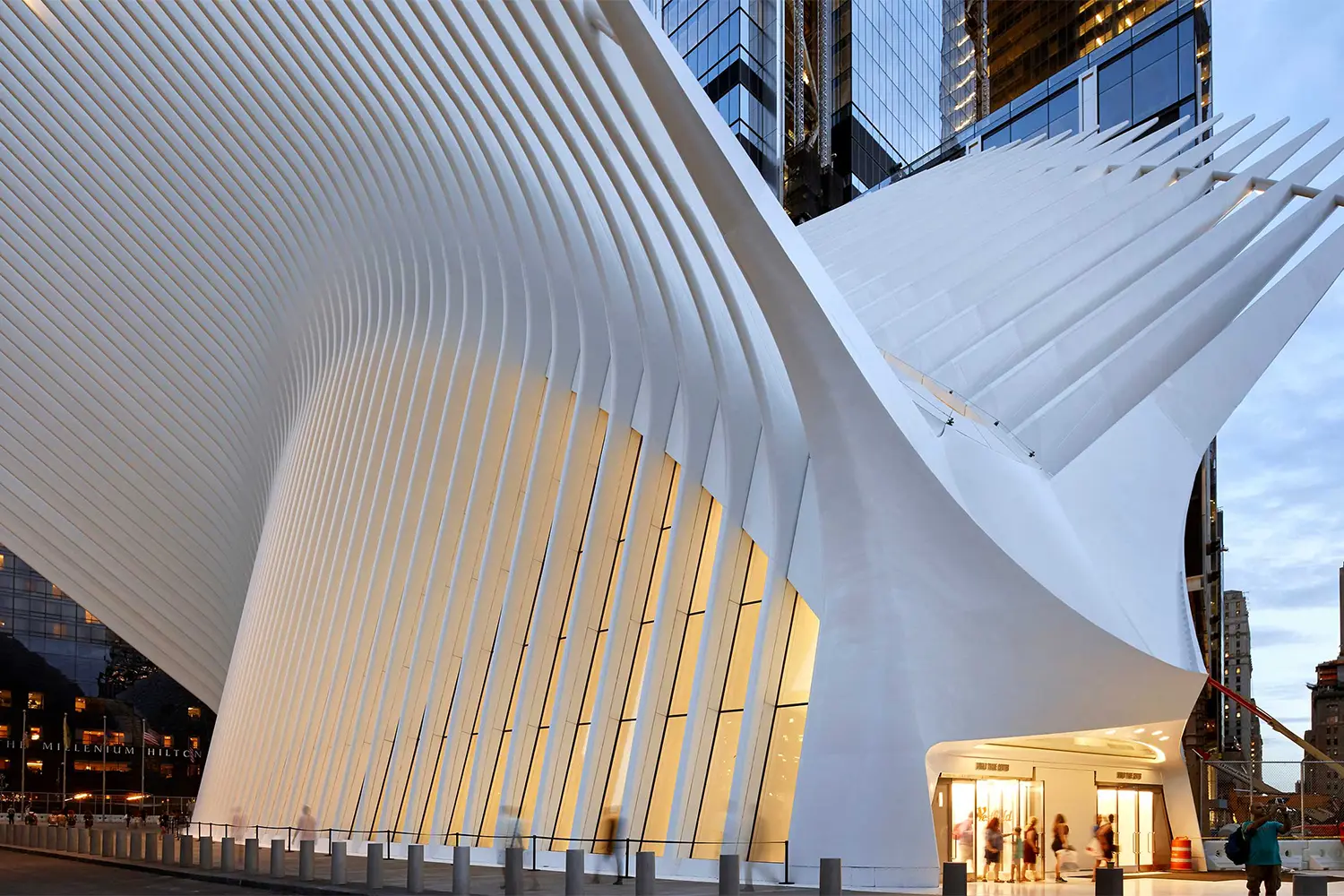
One of Santiago Calatrava’s most prominent projects is located in New York. The center, named after the World Trade Center after the September 11 attacks, opened in 2016.
The design of this structure is inspired by the wings of a bird in flight, symbolizing hope and renewal.
The center’s roof is made of glass and steel and directs natural light into the interior, which gives visitors a sense of openness and relaxation.
Not only is the center an architectural masterpiece, it also serves as a multi-purpose transportation station, connecting various subway and train lines. Its interior also includes numerous shops and restaurants, providing a unique experience for visitors.
Auditorio de Tenerife
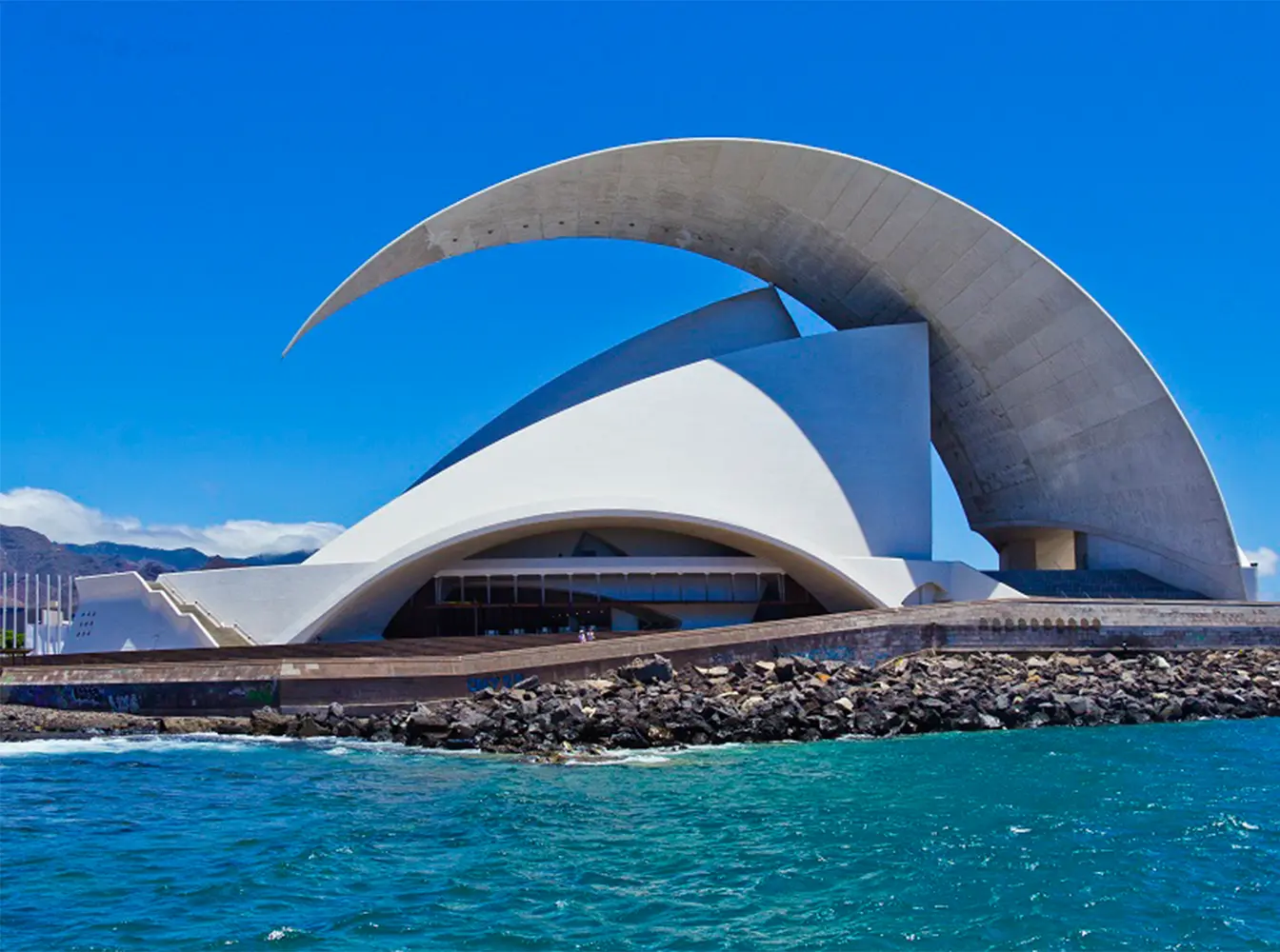
One of Santiago Calatrava’s most notable works, it is located in the city of Santa Cruz de Tenerife, Canary Islands, Spain. Completed in 2003, the structure is recognized as a symbol of modern architecture and an expression of natural and artistic beauty.
The design of this building is inspired by the waves of the sea and the sails of a ship, which are implemented in a dynamic and unique way. Its concrete roof is designed in the shape of a large wave, which inspires a sense of movement and dynamism. The structure includes a concert hall with a capacity of 1,800 people and a chamber music hall with a capacity of 400 people.
The Auditorio de Tenerife is not only a cultural center, but also recognized as one of the architectural symbols of Spain and hosts various events including opera, music concerts, and art shows.
Alamillo Bridge
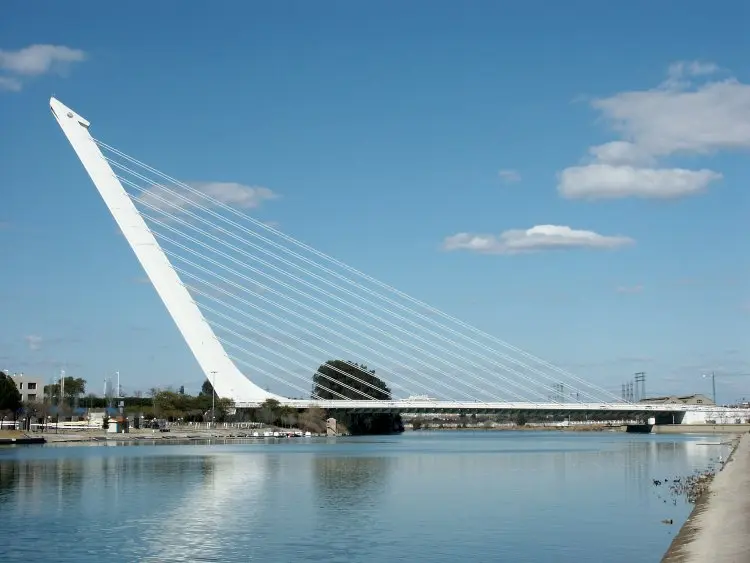
One of the most prominent bridges designed by Santiago Calatrava is located in Seville, Spain. Built in 1992 for the Seville World Fair, the bridge is known for its unique and innovative design.
The design of the bridge features a 58-meter-high tower that is angled and supported by cables. What sets this bridge apart is the lack of additional supports in the middle of the Guadalquivir River, creating a clean and open appearance.
The Alamillo is not only an engineering masterpiece, but also a symbol of movement and dynamism, which is very common in Calatrava’s designs.
Milwaukee Art Museum
The Milwaukee Art Museum is a renowned institution located in Milwaukee, Wisconsin, USA. It’s celebrated not only for its impressive collection of art but also for its spectacular architectural design, especially the Quadracci Pavilion, designed by Santiago Calatrava. This iconic structure, completed in 2001, features a striking element called the Burke Brise Soleil—a pair of wing-like structures that can open and close, evoking movement and dynamism. The wings span 217 feet when fully extended, making it a memorable sight along the shores of Lake Michigan.
The museum’s collection boasts more than 34,000 works of art, spanning centuries and styles, from ancient artifacts to contemporary masterpieces. Notable highlights include American decorative arts, German Expressionist paintings, and pieces by artists like Georgia O’Keeffe. The museum itself serves not only as a hub for art and culture but also as an architectural landmark that draws visitors worldwide.